1. What Is Wellness for Beginners?
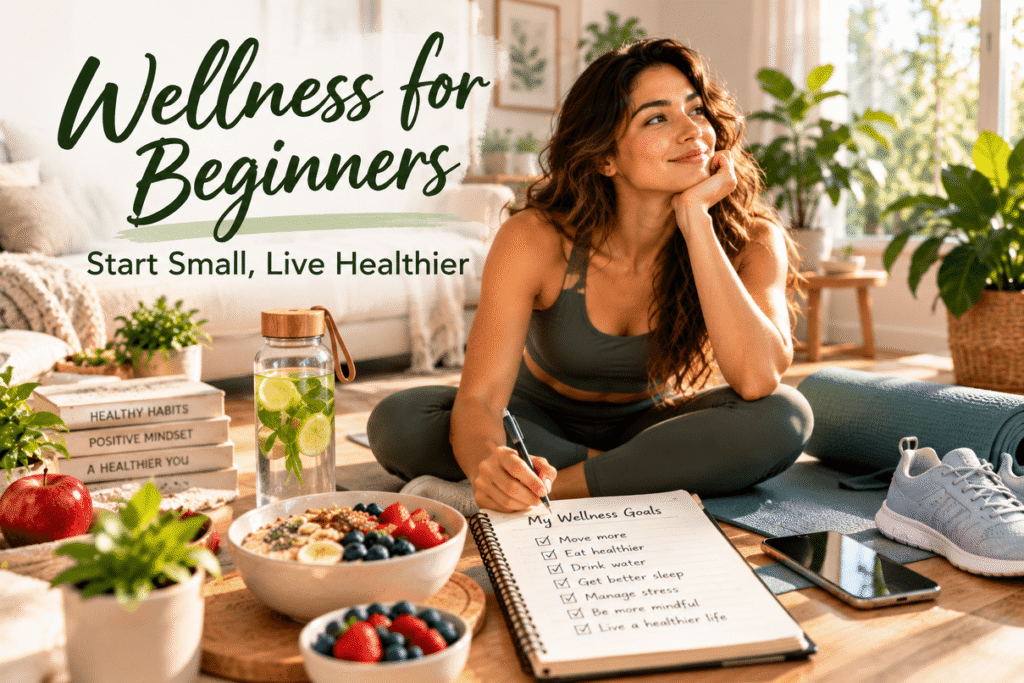
Starting a healthier lifestyle can feel exciting, but it can also feel overwhelming.
You open social media and see people following complicated workout programs, preparing perfectly balanced meals, waking up at 5 a.m., meditating for an hour, tracking every calorie, reading five books a month, and following detailed morning routines.
Wellness for Beginners is not about following a complicated routine; it is about discovering simple actions that make your everyday life healthier and more balanced.
Then you look at your own schedule and think:
“Where am I even supposed to start?”
The answer is simpler than you might expect.
Wellness does not have to begin with a complete lifestyle transformation. In fact, trying to change everything simultaneously can make it harder to create routines that actually fit your life.
Wellness for beginners is about learning how to make realistic improvements one step at a time.
It means looking at your lifestyle as a whole and asking:
- Am I moving my body regularly?
- Am I eating foods that support my wellbeing?
- Am I getting enough quality sleep?
- Am I managing stress?
- Am I making time for relationships?
- Am I paying attention to my emotional wellbeing?
- Am I creating healthy boundaries with technology?
- Am I making responsible financial decisions?
- Am I making time for personal growth?
You do not need perfect answers to all of these questions.
You simply need a place to begin.
A healthier lifestyle is built through everyday choices. One walk. One healthier meal. One earlier bedtime. One meaningful conversation. One mindful pause.
Small decisions can become powerful when you repeat them.
That is the foundation of beginner wellness.
2. Why You Do Not Need to Change Everything at Once
One of the biggest mistakes beginners make is creating an unrealistic wellness checklist.
They decide they will:
- Exercise every day
- Completely change their diet
- Stop eating sugar
- Wake up extremely early
- Meditate daily
- Read every night
- Quit social media
- Save a large percentage of their income
- Sleep eight hours
- Drink huge amounts of water
- Become perfectly productive
The motivation may be strong on day one.
But by day five, the routine can become exhausting.
The problem is not necessarily a lack of motivation.
The problem is that the lifestyle change may be too large to maintain.
A better approach is to reduce the starting point.
Instead of saying, “I need to become healthier,” choose one action.
Instead of “I need to exercise every day,” try taking a 15-minute walk.
Instead of “I need to completely change my diet,” add one nutritious food to a meal.
Instead of “I need to fix my sleep,” start by creating a consistent bedtime.
Instead of “I need to manage all my money better,” begin by reviewing your spending once a week.
This approach creates less friction.
And when an action is realistic, repeating it becomes easier.
Wellness for beginners should feel achievable, not intimidating.
Your goal is not to build the perfect lifestyle in one week.
Your goal is to create a lifestyle you can continue.
The most important lesson in Wellness for Beginners is that sustainable progress usually starts with realistic expectations rather than dramatic overnight changes.
3. The 5 Areas of a Healthier Lifestyle
A truly sustainable approach to wellness goes beyond exercise.
For anyone new to personal wellbeing, Wellness for Beginners should focus on building balance across these areas rather than trying to perfect just one part of life.
At KearnFit, we believe personal wellbeing can be viewed through multiple dimensions that influence one another.
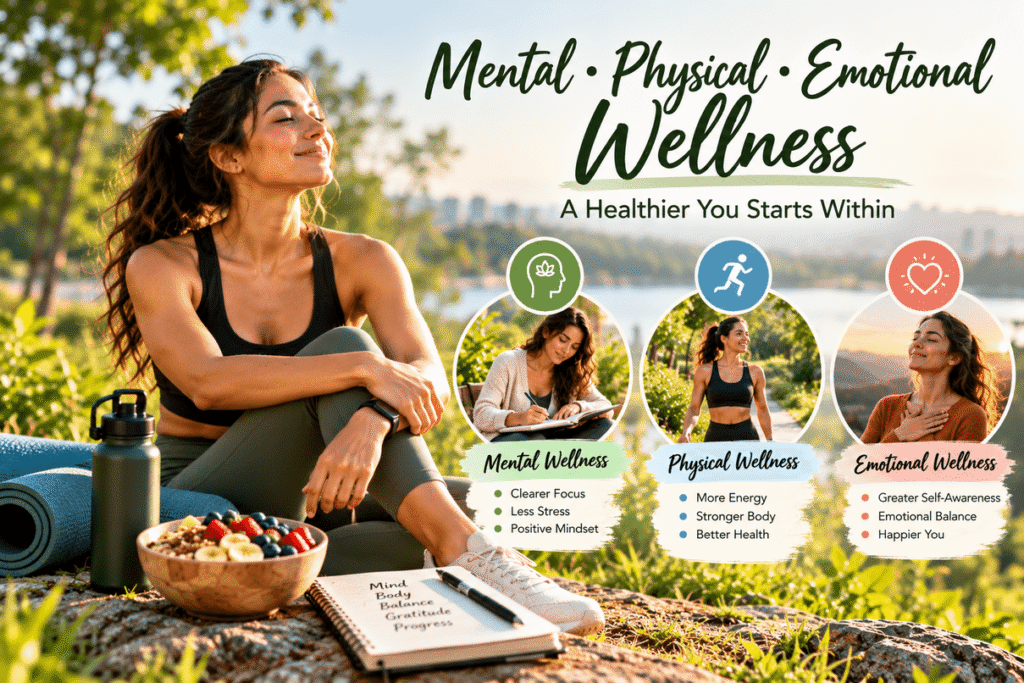
Mental Wellness
Your mind needs attention just as your body does.
Mental wellness can include learning, reflection, stress management, focus, rest, and creating healthy boundaries.
Physical Wellness
Physical wellness includes movement, nutrition, sleep, recovery, mobility, strength, and everyday activity.
You do not need to be an athlete to care for your physical wellbeing.
Emotional Wellness
Emotional wellness involves recognizing emotions, expressing them appropriately, developing self-awareness, and building healthy coping strategies.
You do not need to feel positive all the time.
You need to become more aware of what you are experiencing and learn healthy ways to respond.
Financial Wellness
Money can influence stress, relationships, opportunities, and lifestyle choices.
Financial wellness includes understanding your spending, planning ahead, saving where possible, and developing healthier money habits.
People are not designed to live completely disconnected lives.
Relationships, friendships, communities, mentors, colleagues, and supportive groups can contribute to a more connected lifestyle.
These areas do not operate independently.
Better sleep can influence your energy.
Better energy can make movement easier.
Movement can support your mood.
A healthier routine can improve confidence.
Financial organization can reduce certain sources of stress.
Community support can make healthy goals easier to maintain.
That is why wellness works best as a lifestyle rather than a single activity.
4. 10 Simple Steps to Start Your Wellness Journey
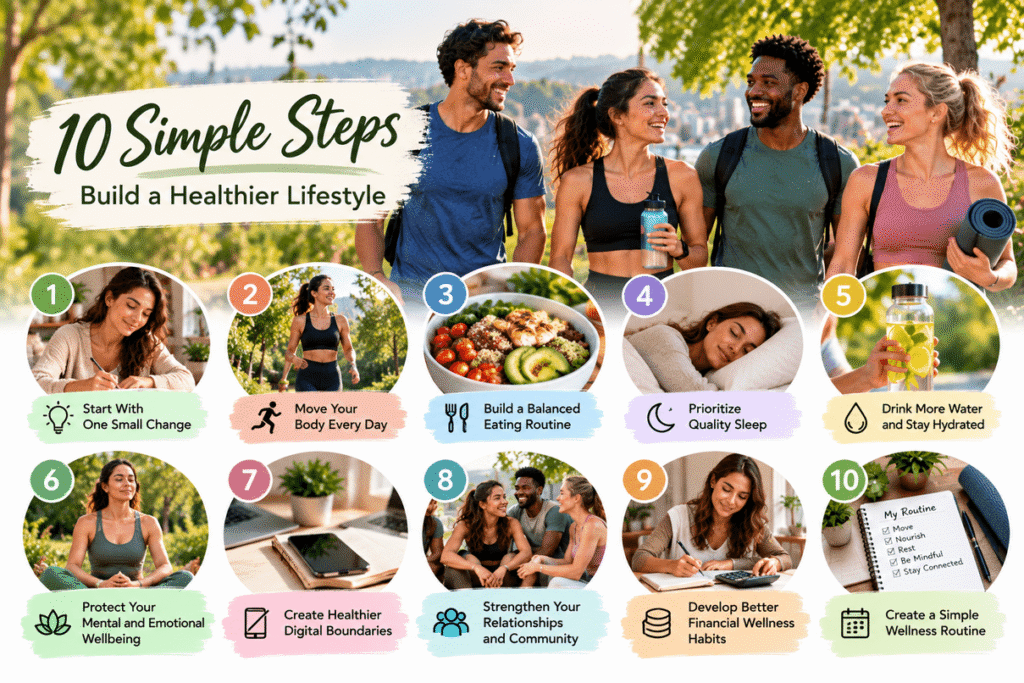
If you are completely new to wellness, you do not need a complicated plan.
Start with these 10 simple steps:
- Start with one small change.
- Move your body every day.
- Build a balanced eating routine.
- Prioritize quality sleep.
- Pay attention to hydration.
- Protect your mental and emotional wellbeing.
- Create healthier digital boundaries.
- Strengthen relationships and community.
- Develop better financial wellness habits.
- Create a simple routine you can repeat.
These steps are intentionally practical.
The goal is not to create a temporary health challenge.
The goal is to help you develop a lifestyle that feels realistic enough to continue.
These 10 steps give Wellness for Beginners a practical starting framework that can be adapted to different schedules, preferences, and lifestyles.
5. Step #1: Start With One Small Change
If you are new to wellness, start smaller than you think.
One of the most effective principles of Wellness for Beginners is to make your first goal so simple that you can realistically repeat it.
Choose one habit that feels almost too easy.
For example:
- Take a 10-minute walk.
- Drink water when you wake up.
- Add fruit to breakfast.
- Go to bed 15 minutes earlier.
- Spend five minutes journaling.
- Stretch before starting work.
- Review your spending every Sunday.
- Put your phone away during meals.
Why start small?
Because consistency matters more than intensity when you are creating a new routine.
A small behavior gives you a chance to experience success.
Success creates confidence.
Confidence makes it easier to continue.
Continuing creates consistency.
And consistency can gradually transform a small behavior into part of your lifestyle.
Instead of asking:
“What is the biggest change I can make?”
Ask:
“What is one healthy action I can realistically repeat?”
That question is often much more useful.
6. Step #2: Move Your Body Every Day
Movement is one of the simplest ways to begin improving your physical wellness.
And movement does not have to mean spending hours in a gym.
You can walk.
You can cycle.
You can dance.
You can swim.
You can stretch.
You can play a sport.
You can take the stairs.
You can perform bodyweight exercises.
You can join a group activity.
The key is finding movement that fits your abilities, preferences, and lifestyle.
For adults, current CDC guidance recommends at least 150 minutes of moderate-intensity physical activity each week, along with muscle-strengthening activity on at least two days. Importantly for beginners, activity can be divided into smaller portions, and some activity is better than none.
If you are currently inactive, you do not have to jump immediately into a demanding program.
A beginner-friendly approach to Wellness for Beginners is to choose enjoyable forms of movement instead of forcing yourself into an exercise routine you dislike.
Start with something manageable.
Try a 10-minute walk after lunch.
Then perhaps increase it to 15 or 20 minutes.
Eventually, you can build toward more structured activity.
The most sustainable exercise is often the exercise you are willing to do consistently.
For beginners, think:
Move first. Improve gradually.
If you have a chronic condition, disability, or concerns about starting vigorous exercise, consider speaking with an appropriate healthcare professional about what type and amount of activity is right for you.
7. Step #3: Build a Balanced Eating Routine
Healthy eating does not mean following the latest restrictive diet.
It means developing a food pattern that provides variety and supports your nutritional needs.
WHO guidance emphasizes dietary diversity, adequacy, balance, and moderation, with healthy dietary patterns generally including foods such as vegetables, fruits, legumes, nuts, and whole grains while limiting excessive amounts of free sugars, sodium, and unhealthy fats.
For beginners, avoid making food unnecessarily complicated.
Wellness for Beginners can start with simple food choices rather than restrictive diets or complicated meal plans.
Start with a few simple principles.
Add More Variety
Try adding different colors and types of vegetables and fruits to your meals.
Include Protein Sources
Depending on your preferences and dietary needs, this may include beans, lentils, eggs, dairy, fish, poultry, nuts, seeds, tofu, or other protein-rich foods.
Choose More Whole Foods
Build more meals around foods that are minimally processed and nutrient-rich.
Pay Attention to Portions
You do not need to fear food.
Instead, learn to recognize what makes a meal satisfying and balanced for you.
Plan Simple Meals
You are more likely to make a practical choice when healthy options are convenient.
A beginner-friendly meal plan might be as simple as:
Breakfast: Oats + fruit + nuts
Lunch: Rice or whole grain + vegetables + lentils or another protein source
Snack: Fruit + yogurt or nuts
Dinner: Vegetables + protein + a suitable carbohydrate source
Your exact nutritional needs may differ based on your age, health, activity level, culture, preferences, and other factors.
The goal is not perfection.
The goal is to make nourishing choices more often.
8. Step #4: Prioritize Quality Sleep
Sleep is sometimes treated like the activity you do after everything else is finished.
That mindset can create problems.
For Wellness for Beginners, improving sleep can be as simple as creating a consistent bedtime and making your evening routine more relaxing.
If your schedule is packed, sleep is often the first thing sacrificed.
But sleep is an important part of a healthy lifestyle.
The CDC states that adults ages 18–60 generally need at least seven hours of sleep per night, while recommended sleep duration changes with age. Healthy sleep habits also include keeping a consistent sleep schedule and turning off electronic devices at least 30 minutes before bedtime.
If your current sleep routine is inconsistent, do not try to change everything overnight.
Start with one improvement.
Try going to bed at approximately the same time each night.
Create a relaxing pre-sleep routine.
Dim the lights.
Put your phone away.
Read something calming.
Prepare your clothes for tomorrow.
Keep your bedroom comfortable and relaxing.
A simple evening routine might look like:
9:30 p.m. — Finish work
9:45 p.m. — Prepare for tomorrow
10:00 p.m. — Put away screens
10:05 p.m. — Read or journal
10:30 p.m. — Lights out
Your ideal schedule will depend on your life.
The important lesson is that sleep deserves a place in your wellness plan.
9. Step #5: Drink More Water and Pay Attention to Hydration
Hydration is another simple area where beginners can create a practical routine.
Instead of obsessing over one universal water target, pay attention to your individual needs and circumstances.
Your fluid needs can vary depending on activity, climate, diet, health, and other factors.
One useful strategy is to make drinking water part of existing routines.
Keeping hydration simple is another practical Wellness for Beginners strategy because small routines are easier to remember and repeat.
For example:
- Drink water after waking up.
- Keep a bottle nearby during work.
- Drink water with meals.
- Take water when exercising.
- Keep a bottle with you while traveling.
- Drink regularly throughout the day.
The goal is not to turn hydration into another stressful task.
Make it convenient.
A reusable bottle on your desk can become a simple environmental cue.
If you are active outdoors or exercising heavily, your hydration needs may differ from someone spending the day in a cool office.
Listen to your body and consider professional advice when medical conditions or special circumstances affect your fluid needs.
10. Step #6: Protect Your Mental and Emotional Wellbeing
A healthier lifestyle is not only about what you eat or how much you exercise.
Your inner world matters too.
Start by becoming more aware of how you feel.
Ask yourself:
What is stressing me right now?
What do I need more of?
What do I need less of?
When do I feel most energized?
What situations repeatedly drain me?
Who can I talk to when things feel difficult?
Simple practices can help you create more awareness.
Try journaling.
Take a quiet walk.
Practice slow breathing.
Spend time outdoors.
Talk to someone you trust.
Create breaks between demanding tasks.
Learn to say no when appropriate.
Make time for activities you genuinely enjoy.
Emotional wellness does not mean eliminating difficult emotions.
Stress, disappointment, frustration, sadness, and uncertainty are part of human life.
The goal is to develop healthier ways of noticing, processing, and responding to what you experience.
If emotional or mental health concerns feel persistent, severe, or difficult to manage, reaching out to a qualified mental health professional can be an important part of caring for yourself.
Wellness is not about pretending everything is fine.
It is about building the skills and support systems that help you navigate life more effectively.
11. Step #7: Create Healthier Digital Boundaries
Technology can make life easier.
It helps us communicate, learn, work, organize, and stay connected.
Healthy technology habits are becoming an increasingly useful part of Wellness for Beginners, especially for people who spend much of their day online.
But constant digital stimulation can also make it difficult to switch off.
For beginners, digital wellness can start with a few simple boundaries.
Try:
- Turning off unnecessary notifications.
- Keeping your phone away during meals.
- Creating screen-free periods.
- Avoiding unnecessary scrolling before bed.
- Unfollowing accounts that consistently make you feel negative.
- Taking movement breaks during long periods of screen use.
- Keeping your bedroom less technology-focused.
- Checking email at intentional times instead of constantly.
You do not need to eliminate technology.
You need to become more intentional about how you use it.
Ask:
“Is this technology helping me right now, or am I using it automatically?”
That one question can change your relationship with your devices.
A healthier digital lifestyle is not about rejecting technology.
It is about making technology work for your wellbeing rather than allowing it to control your attention.
12. Step #8: Strengthen Your Relationships and Community
Wellness becomes easier to sustain when you are not trying to do everything alone.
Your environment matters.
Your friends matter.
Your family matters.
Your colleagues matter.
Your community matters.
If you want to become more active, invite someone for a walk.
If you want to eat healthier, cook with a friend.
If you want to learn something new, join a class.
If you want accountability, find someone with similar goals.
If you want personal growth, surround yourself with people who encourage positive action.
Community can make healthy activities feel more enjoyable.
Community support can make Wellness for Beginners more enjoyable because healthy goals become easier to pursue when you have encouragement and accountability.
Instead of saying:
“I have to exercise.”
You might think:
“I get to meet my friend for a walk.”
The activity becomes social.
Instead of:
“I have to stay accountable.”
You can say:
“Someone is joining me on this journey.”
That difference can matter.
A supportive environment can turn wellness from an individual task into a shared experience.
13. Step #9: Develop Better Financial Wellness Habits
Financial wellness is an important part of a healthier lifestyle, but it is often overlooked.
Money affects choices.
It can influence stress, housing, food, education, travel, healthcare, relationships, and future opportunities.
You do not need to become a financial expert to begin.
Start with awareness.
Financial awareness is an important but sometimes overlooked part of Wellness for Beginners, especially when building a healthier lifestyle for the long term.
Know approximately:
- What comes in each month.
- What goes out.
- What recurring expenses you have.
- What debts you are managing.
- What you are saving.
- What purchases are unnecessary.
- What financial goals matter to you.
Try creating a simple weekly money check-in.
Spend 15 minutes reviewing your recent spending.
Ask:
“Did my spending reflect my priorities?”
You can then identify one small improvement.
Perhaps you reduce an unnecessary subscription.
Perhaps you create a basic emergency savings goal.
Perhaps you automate a small amount toward savings.
Perhaps you start tracking discretionary spending.
The goal is not to become wealthy overnight.
The goal is to become more intentional.
Financial wellness can support broader lifestyle wellness because better organization can help you make more informed choices about your future.
14. Step #10: Create a Simple Wellness Routine
Once you understand the basics, bring them together.
Your wellness routine does not need to take two hours.
It can be simple.
For example:
Morning
- Wake up at a consistent time.
- Drink water.
- Get some natural light.
- Move for a few minutes.
- Eat a nourishing breakfast if you prefer one.
- Set one priority for the day.
Workday
- Take movement breaks.
- Drink water regularly.
- Eat a balanced meal.
- Step away from screens periodically.
- Take a few moments to reset when stress rises.
Evening
- Eat a satisfying dinner.
- Spend time with people you care about.
- Review tomorrow’s priorities.
- Reduce unnecessary screen use.
- Practice a calming activity.
- Go to bed at a consistent time.
Weekly
- Exercise regularly.
- Review finances.
- Plan some meals.
- Connect with someone.
- Spend time outdoors.
- Reflect on your progress.
Notice what is missing?
There is no requirement to make your routine perfect.
A wellness routine should support your life.
It should not become another source of pressure.
15. How to Create a Beginner-Friendly Morning Routine
You do not need to wake up before sunrise to have a healthy morning.
Your routine should match your schedule.
A realistic morning routine can become one of the easiest starting points for Wellness for Beginners because it creates an opportunity to begin the day intentionally.
A simple 30-minute morning routine could look like this:
Minute 0–5: Wake up and drink water.
Minute 5–10: Open the curtains and get some natural light.
Minute 10–15: Stretch or walk around.
Minute 15–20: Prepare breakfast.
Minute 20–25: Review your priorities.
Minute 25–30: Get ready for the day.
If you have more time, add journaling, meditation, reading, exercise, or another activity you enjoy.
But remember:
A good morning routine is one that you can actually maintain.
If you only have 15 minutes, build a 15-minute routine.
If you have 60 minutes, you can build a longer one.
Wellness should adapt to your life rather than forcing your life to adapt to an unrealistic routine.
16. How to Build Healthy Habits Without Feeling Overwhelmed
One of the biggest beginner wellness challenges is trying to remember too many things.
Instead, create a simple system.
A simple approach to Wellness for Beginners is to choose a few realistic habits and give yourself time to make them part of your everyday routine.
Choose three priorities.
For example:
Priority 1: Move
Walk for 20 minutes.
Priority 2: Nourish
Add vegetables or fruit to two meals.
Priority 3: Recover
Create a consistent bedtime.
Once these behaviors feel normal, add another.
This gradual approach can make your lifestyle change feel more manageable.
You can also use habit stacking.
For example:
After brushing my teeth → I stretch for two minutes.
After lunch → I walk for 10 minutes.
After dinner → I review tomorrow’s schedule.
After payday → I review my budget.
The existing routine becomes a reminder for the new behavior.
The easier the behavior is to remember and complete, the easier it can be to repeat.
17. Wellness for Busy Professionals
Busy professionals often believe they need more time before they can become healthier.
But wellness does not always require large blocks of free time.
You can integrate small actions into your existing schedule.
Try walking during a phone call.
Take the stairs when practical.
Keep nutritious snacks available.
Stand up during short breaks.
Schedule workouts like meetings.
Prepare simple meals in advance.
Use short breathing breaks between demanding tasks.
Protect your lunch break.
Create a consistent evening shutdown routine.
Set boundaries around after-hours communication.
Wellness for Beginners can fit even into a demanding professional schedule when healthy choices are connected to routines you already follow.
Review your finances once a week instead of constantly worrying about them.
A busy lifestyle does not automatically prevent wellness.
The key is designing your habits around the life you actually have.
Ask:
“Where can wellness fit into my existing day?”
That question is often more productive than:
“When will I finally have enough time?”
18. Beginner Wellness Mistakes to Avoid
Starting a healthier lifestyle is exciting, but there are several common mistakes worth avoiding.
Mistake #1: Trying to Change Everything
Too many changes create unnecessary pressure.
Choose a starting point.
Mistake #2: Expecting Immediate Results
Lifestyle improvements take time.
Focus on actions rather than constantly judging outcomes.
Mistake #3: Comparing Your Journey
Your starting point is different from someone else’s.
Social media often shows the result, not the process.
Mistake #4: Following Every Trend
Not every wellness trend deserves your attention.
Look for practical, evidence-informed habits that fit your needs.
Mistake #5: Treating One Bad Day as Failure
Missing one workout does not erase your progress.
Eating one less-balanced meal does not mean your lifestyle is ruined.
Return to your routine.
Mistake #6: Making Wellness Punishing
Exercise should not become punishment for eating.
Food should not become a reward system for being “good.”
Wellness should support a healthier relationship with yourself.
Mistake #7: Ignoring Recovery
More is not always better.
Rest, sleep, reflection, and recovery are part of sustainable progress.
19. How to Stay Motivated When Progress Feels Slow
Motivation changes.
Some days you will feel energized.
One of the most useful ideas in Wellness for Beginners is to measure progress by consistency and daily actions rather than expecting instant results.
Other days you will not.
That is normal.
Instead of depending entirely on motivation, build systems that make healthy actions easier.
Prepare your walking shoes the night before.
Keep healthy foods available.
Put your water bottle on your desk.
Schedule workouts.
Keep your financial review on your calendar.
Put your phone away before bed.
Write your goals somewhere visible.
Ask someone to hold you accountable.
The goal is to make the healthier choice easier to remember and easier to complete.
Also, track more than visible results.
You may not immediately see physical changes.
But you might notice:
- More energy.
- Better confidence.
- Improved consistency.
- Better sleep routines.
- Greater awareness.
- Less impulsive spending.
- More intentional technology use.
- Better relationships.
- Greater emotional awareness.
These are meaningful forms of progress too.
20. The Role of Consistency in a Healthier LifestyleYou do not need a perfect week.
You need a lifestyle that can survive imperfect weeks.
Think about your habits over months rather than days.
Ultimately, Wellness for Beginners is about creating routines that remain practical even when life becomes busy, unpredictable, or challenging.
One walk is useful.
But repeated walking becomes a routine.
One nutritious meal is useful.
But repeated balanced meals create a dietary pattern.
One good night of sleep feels good.
But a consistent sleep schedule creates a stronger routine.
One financial check-in creates awareness.
Repeated check-ins create financial organization.
One conversation strengthens connection.
Repeated meaningful conversations strengthen relationships.
This is why consistency matters.
Do not ask:
“Did I do everything perfectly today?”
Ask:
“Did I move my lifestyle in a healthier direction?”
That shift in perspective can make wellness feel much more sustainable.
21. A Simple 30-Day Beginner Wellness Challenge
Ready to begin?
This Wellness for Beginners challenge is designed to help you turn simple intentions into practical daily actions without creating unnecessary pressure.
Try this simple 30-day challenge.
Days 1–3: Awareness
Write down your current routines.
Notice your sleep, movement, meals, screen use, stress, relationships, and spending.
Do not judge yourself.
Simply observe.
Days 4–7: Choose One Habit
Select one small behavior.
For example:
10-minute daily walk.
Focus on consistency.
Days 8–10: Improve Your Food Environment
Add more nutritious options to your kitchen.
Make healthy choices easier to access.
Days 11–13: Improve Your Sleep Routine
Choose a consistent bedtime and create a relaxing evening routine.
Days 14–16: Add Mental Wellness
Spend five to ten minutes journaling, walking quietly, breathing, reading, or reflecting.
Days 17–19: Create Digital Boundaries
Choose one screen-free period each day.
Days 20–22: Connect
Call a friend.
Meet someone for a walk.
Join a community.
Have a meaningful conversation.
Days 23–25: Review Your Finances
Look at your spending.
Identify one financial habit you can improve.
Days 26–28: Combine Your Habits
Bring several habits together into a simple daily routine.
Days 29–30: Reflect
Ask:
- What worked?
- What felt difficult?
- What felt enjoyable?
- What would I like to continue?
- What should I change?
- What is my next small goal?
The purpose of the challenge is not to become perfect in 30 days.
It is to discover which habits fit your lifestyle.
22. How KearnFit Supports Your Wellness Journey

Wellness becomes more powerful when it is viewed as a complete lifestyle.
That is where KearnFit comes in.
At KearnFit, we believe fitness is more than physical exercise.
The KearnFit approach makes Wellness for Beginners easier to understand by connecting mental, physical, emotional, financial, and community wellbeing.
It includes multiple dimensions of personal wellbeing.
Mental fitness helps you build awareness, resilience, focus, and healthier ways of approaching challenges.
Physical fitness helps you develop strength, movement, energy, mobility, and sustainable physical habits.
Emotional fitness encourages self-awareness, emotional understanding, healthy expression, and stronger relationships with yourself and others.
Financial fitness helps you become more intentional about money, planning, spending, saving, and long-term lifestyle decisions.
And surrounding all of these dimensions is community.
You do not have to figure everything out alone.
A supportive community can provide accountability, ideas, encouragement, learning opportunities, and meaningful connections.
That is the KearnFit approach:
Build yourself from the inside out.
You can start with one habit.
You can learn.
You can connect.
You can grow.
And you can keep improving one step at a time.
Explore more wellness resources and connect with the KearnFit community at www.kearnfit.com.
23. Conclusion: Start Small, Grow Stronger
Starting a healthier lifestyle does not require you to become a completely different person tomorrow.
You do not need the perfect workout plan.
You do not need an expensive wellness routine.
You do not need to follow every health trend.
You simply need a starting point.
Begin with one small change.
Move your body.
Eat nourishing foods.
Protect your sleep.
Stay hydrated.
Take care of your mental and emotional wellbeing.
Create healthier digital boundaries.
Build meaningful relationships.
Pay attention to your financial habits.
And create a routine that fits your real life.
The most important part of wellness for beginners is understanding that progress does not have to be dramatic to be meaningful.
A 10-minute walk counts.
A healthier meal counts.
Going to bed earlier counts.
Putting your phone away counts.
Calling someone you care about counts.
Saving a little money counts.
Taking five minutes to reflect counts.
These actions may seem small individually.
But your lifestyle is created by what you repeatedly do.
So do not wait for the perfect Monday.
Do not wait until you have more time.
Do not wait until you feel completely motivated.
Start where you are.
Choose one healthy action.
Repeat it.
Then build from there.
Because a healthier life is not created in one giant transformation.
It is created through hundreds of small decisions that gradually become part of who you are.
The real goal of Wellness for Beginners is not perfection—it is creating practical habits that gradually become part of a healthier lifestyle.
Start small. Stay consistent. Keep growing.
And when you are ready to take your wellness journey further, join the KearnFit community and explore a more complete approach to mental, physical, emotional, and financial fitness.
Visit www.kearnfit.com and take your next step toward a stronger, healthier lifestyle.