1. What Is the Mind-Body Connection?
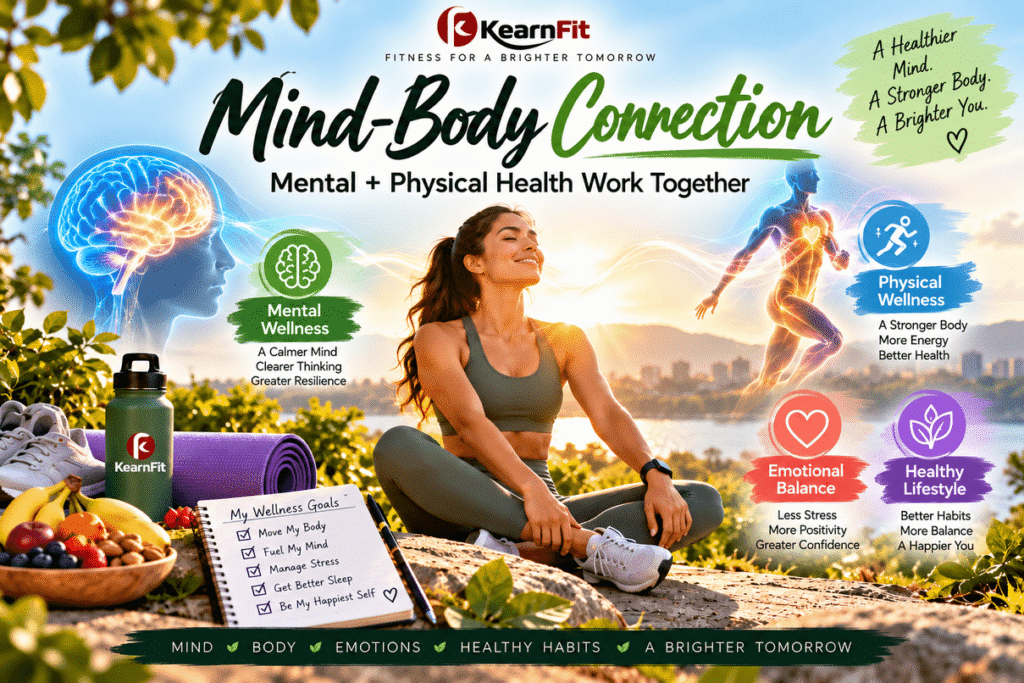
Your mind and body may feel like two separate parts of your life, but they are constantly communicating.
The way you think, feel, sleep, move, eat, recover, and respond to stress can influence how you experience your day. At the same time, your physical condition can affect your mood, energy, concentration, confidence, and ability to handle everyday challenges.
This relationship is often described as the mind-body connection.
The concept does not mean that every physical symptom is caused by your thoughts or emotions. It also does not mean that positive thinking can replace medical care. Instead, it recognizes something much more practical: mental and physical health are closely connected parts of overall health.
The CDC describes mental health as closely linked with physical health and notes that each can influence the other.
That is why a truly healthy lifestyle should not focus only on workouts, weight, or physical appearance.
It should also make room for mental clarity, emotional awareness, quality sleep, stress management, healthy relationships, meaningful routines, and recovery.
This is where the mind-body connection becomes especially valuable.
Rather than asking, “How can I become physically healthier?” or “How can I feel mentally better?” you can begin asking a broader question:
“What can I do today that supports both my mind and my body?”
That shift can make wellness more balanced, realistic, and sustainable.
2. Why Mental and Physical Health Cannot Be Separated
Imagine waking up after several nights of poor sleep.
You may notice that you feel physically tired. But you might also find it harder to concentrate, manage frustration, stay motivated, or enjoy normal activities.
Now consider the opposite situation.
You spend time moving your body, eating nourishing meals, sleeping consistently, and connecting with people you trust. These physical and lifestyle habits can create a stronger foundation for your mental and emotional wellbeing.
The relationship works in both directions.
The CDC notes that taking care of physical health may improve aspects of mental health, while taking care of mental health can also support physical health.
Physical activity provides a particularly clear example. Current CDC guidance notes that activity can improve sleep, reduce short-term feelings of anxiety, support brain health, and reduce the risk of depression while also supporting physical health.
This does not mean exercise is a universal treatment for mental health conditions. It means movement is one practical behavior that can contribute to overall wellbeing.
The same principle applies to sleep, nutrition, stress management, relationships, and recovery.
Your wellness routine becomes stronger when these areas work together instead of being treated as completely separate goals.
Understanding the Mind-Body Connection can help you approach wellness as a complete lifestyle rather than treating mental and physical health as unrelated goals.
3. How Stress Connects the Mind and Body
Stress is one of the clearest examples of the mind-body connection in everyday life.
When you experience stress, your body responds. Heart rate and breathing can increase, muscles can tense, and other physiological changes can occur as part of the body’s stress response.
Occasional stress is a normal response to challenges. However, long-term or chronic stress can contribute to or worsen problems involving sleep, headaches, digestion, and mental wellbeing.
This explains why a stressful period at work may leave you feeling physically exhausted.
It also explains why taking care of your body can sometimes help you feel more mentally prepared to handle challenges.
Relaxation practices provide another example. Research reviewed by the National Center for Complementary and Integrative Health suggests that techniques such as deep breathing, progressive relaxation, meditation, and other relaxation approaches may help manage stress and anxiety for some people.
The goal is not to eliminate every stressful experience.
Instead, the goal is to develop healthy ways to notice stress, respond to it, recover from it, and avoid allowing temporary pressure to dominate your entire lifestyle.
4. 8 Powerful Ways to Strengthen Your Mind-Body Connection
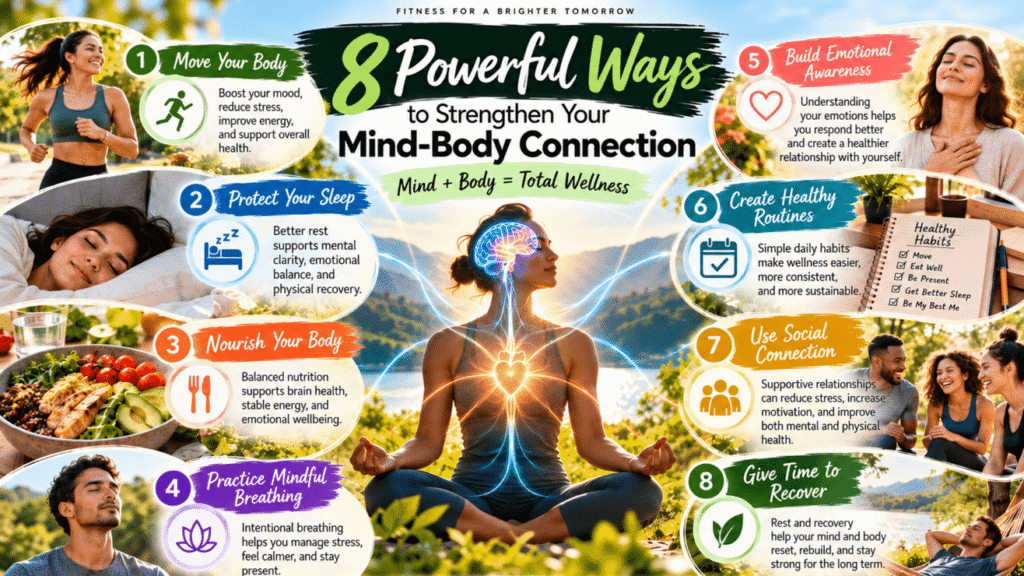
A stronger mind-body connection does not require a complicated wellness program.
You can build it through ordinary habits repeated consistently.
Here are eight powerful approaches:
1. Move your body regularly.
Movement can support physical health while also benefiting mood, sleep, and brain health.
2. Protect your sleep.
Rest gives both your body and mind time to recover.
3. Nourish your body.
Balanced nutrition provides the foundation your body needs while supporting your overall wellbeing.
4. Practice mindful breathing and relaxation.
Intentional pauses can help you respond to stress instead of automatically reacting to it.
5. Develop emotional and body awareness.
Learning to notice tension, fatigue, restlessness, and emotional changes can help you respond earlier.
6. Create healthy daily routines.
Consistent routines reduce unnecessary decision-making and create structure for wellness.
7. Strengthen social connection.
Supportive relationships can benefit both mental and physical wellbeing.
8. Prioritize recovery.
Your mind and body need periods of rest, not just periods of productivity.
The important point is that these strategies are interconnected.
A morning walk may provide movement, sunlight, reflection, and social connection. A consistent bedtime can improve recovery while helping you create a more predictable daily rhythm. Cooking a nutritious meal can become both a physical wellness habit and a mindful ritual.
Small habits can therefore support multiple dimensions of wellness at once.
5. Way #1: Move Your Body to Support Your Mind
Movement is one of the most practical ways to strengthen the mind-body connection.
Physical activity directly involves your body, but its benefits are not limited to muscles, bones, and cardiovascular fitness.
This is one of the clearest everyday examples of the Mind-Body Connection, because the same activity can support physical fitness while also contributing to mental wellbeing.
Current CDC guidance says physical activity can improve sleep, reduce feelings of anxiety, support brain health, and reduce the risk of depression.
WHO similarly describes regular physical activity as beneficial for both physical and mental health, including benefits related to mental wellbeing, cognitive health, and symptoms of depression and anxiety.
This does not mean you need to spend hours in a gym.
Walking, cycling, dancing, swimming, recreational sports, stretching, active hobbies, and many everyday forms of movement can contribute to a more active lifestyle.
For adults, current U.S. physical activity guidance recommends at least 150 minutes of moderate-intensity activity per week, along with muscle-strengthening activity on at least two days. Importantly, the CDC also emphasizes that some activity is better than none.
The best starting point is therefore not necessarily the hardest workout.
It is the movement you can realistically repeat.
Try a 10-minute walk after lunch.
Take the stairs when practical.
Stretch between long periods of sitting.
Walk while having a phone conversation.
Join a recreational activity you genuinely enjoy.
Do a short bodyweight workout at home.
These small actions can make movement feel less like a punishment and more like a normal part of life.
The goal is to create a relationship with movement that supports both your body and your mind.
6. Way #2: Protect Your Sleep for Better Mental and Physical Wellness
Sleep is one of the most overlooked parts of the mind-body connection.
When life becomes busy, sleep is often the first thing people sacrifice.
Work runs late. Screens stay on. Social commitments extend into the evening. The next morning arrives, and the cycle begins again.
But sleep is not simply “time when nothing is happening.”
It is an important part of physical and emotional recovery.
The CDC states that good sleep is essential for health and emotional wellbeing. For adults aged 18–60, the general recommendation is seven or more hours per night, with different recommendations for older age groups.
Sleep also connects directly with physical health. CDC guidance notes that getting enough good-quality sleep supports the body’s normal functioning and is important for heart health.
So how can you strengthen this part of your mind-body routine?
Start with consistency.
Try to keep a reasonably regular bedtime and wake-up time.
Create a calmer final hour before bed.
Reduce unnecessary digital stimulation.
Keep your bedroom comfortable, dark, and quiet where possible.
Avoid turning your bed into an office, entertainment center, and scrolling station.
Also remember that sleep problems are not always solved by simply “trying harder.” Persistent sleep difficulties may have underlying causes that deserve professional attention.
Instead of treating sleep as wasted time, view it as an investment in tomorrow’s energy, focus, mood, and physical recovery.
A healthier morning often begins the night before.
7. Way #3: Nourish Your Body to Support Brain and Emotional Health
Food is another important part of the mind-body connection.
What you eat is primarily discussed in terms of physical health, but eating patterns also influence how you feel throughout the day.
Think about the difference between rushing through meals, constantly skipping breakfast or lunch, relying heavily on convenience foods, and then feeling depleted—or creating a more balanced routine with regular, nourishing meals.
The second approach may provide more structure and support for your overall lifestyle.
Healthy eating does not need to mean perfection.
It can mean building meals around a variety of nutritious foods, such as vegetables, fruits, whole grains, protein-rich foods, and other foods that fit your needs, preferences, culture, and budget.
It also means avoiding the idea that wellness requires an expensive collection of powders, supplements, or trendy products.
Nourishing your body with consistent, balanced meals is another practical way to strengthen the Mind-Body Connection as part of a sustainable wellness routine.
Instead, focus on consistency.
Plan a few simple meals.
Keep nutritious foods available.
Drink water regularly.
Eat slowly enough to notice when you are satisfied.
Make meals an opportunity to step away from work when possible.
You can even turn eating into a mindfulness practice.
Notice the colors, textures, flavors, and pace of the meal.
Put your phone away for a few minutes.
Allow yourself to actually experience the food rather than consuming it while answering messages.
This creates a small but meaningful connection between physical nourishment and mental presence.
The goal is not to create anxiety around food.
The goal is to make nourishment a supportive part of your overall lifestyle.
8. Way #4: Practice Mindful Breathing and Relaxation
You do not need a 60-minute meditation session to create a moment of calm.
Sometimes the most useful practice is a short pause.
Take a few slower breaths.
Relax your shoulders.
Notice the sensations in your body.
Step outside.
Close your eyes for a moment.
Allow your attention to return to what is happening right now.
These simple actions can help create awareness of the relationship between mental stress and physical tension.
The NCCIH explains that relaxation techniques can trigger a relaxation response characterized by slower breathing and changes such as reduced heart rate and blood pressure.
Research also suggests that practices such as meditation and mindfulness may help with certain symptoms of anxiety, depression, and insomnia, although these practices should be viewed as supportive approaches rather than replacements for appropriate medical or mental healthcare.
Try a simple routine:
Pause → Breathe → Notice → Relax → Continue.
For example, before opening your laptop in the morning, take three slow breaths.
Before responding to a frustrating message, pause.
During a stressful afternoon, take two minutes to step away from your desk.
Before bed, use gentle breathing to transition out of work mode.
These moments may appear small, but they teach your mind and body that you do not have to operate at maximum intensity all day.
9. Way #5: Build Emotional Awareness Through Body Awareness
Emotions are not just thoughts.
They can also be experienced physically.
Stress might feel like tight shoulders.
Anxiety may be accompanied by a racing heart or restless energy.
Sadness can sometimes come with fatigue or heaviness.
Excitement may create a noticeable increase in energy.
Learning to notice these signals can improve self-awareness.
This does not mean assuming that every physical sensation has an emotional cause. Physical symptoms can have many explanations, and persistent or concerning symptoms should be evaluated appropriately.
Instead, think of body awareness as another source of information.
Ask yourself:
What am I feeling?
Where do I notice it in my body?
What happened before I felt this way?
What might I need right now?
Maybe you need a break.
Maybe you need movement.
Maybe you need food or water.
Maybe you need to talk to someone.
Maybe you need to set a boundary.
Maybe you need professional support.
The value of this practice is that it creates a pause between experiencing something and automatically reacting to it.
That pause can be powerful.
Emotional wellness is not about being positive all the time.
It is about developing a healthier relationship with your emotions and learning constructive ways to respond.
10. Way #6: Create Healthy Daily Routines
The mind-body connection becomes easier to support when healthy behaviors have a place in your daily routine.
Without structure, wellness can become something you remember only when you have free time.
And free time can be unpredictable.
A simple routine can remove some of that friction.
For example:
Morning:
Drink water, get natural light, move for a few minutes, and identify your main priority.
Midday:
Take a movement break, eat a nourishing meal, and step away from screens when practical.
Afternoon:
Check your energy and stress level before automatically pushing through.
Evening:
Reduce unnecessary stimulation, spend time with people you value, and prepare for sleep.
Night:
Reflect briefly on what went well and allow yourself to transition into rest.
Your routine does not have to look exactly like this.
The important thing is creating anchors.
Maybe your anchor is a morning walk.
Maybe it is preparing lunch the night before.
Maybe it is a five-minute breathing practice after work.
Maybe it is putting your phone away 30 minutes before bed.
Healthy routines become powerful when they are realistic enough to repeat.
Do not create a 15-step morning routine that requires an hour and then feel like you failed when you cannot maintain it.
Start with two or three behaviors.
Build consistency.
Then expand gradually.
Wellness can become overly individualistic.
We talk about workouts, diets, meditation, sleep trackers, productivity systems, and personal goals.
But humans also need connection.
The CDC describes social connection as important to both mental and physical health and notes that supportive relationships can help people manage stress and support healthy behaviors such as physical activity and healthy eating.
This makes community an important part of the mind-body connection.
You might exercise more consistently when you have a walking partner.
You might cook healthier meals when you share them with friends.
You might handle difficult periods better when you have someone you can talk to.
You might feel more motivated when a community celebrates your progress.
Connection does not have to mean having hundreds of contacts.
Quality matters.
A meaningful conversation can be more valuable than a large social feed.
Try scheduling a weekly walk with a friend.
Join a local activity.
Take a group fitness class.
Cook with your family.
Participate in a community event.
Create a small accountability group.
At KearnFit, this community dimension matters because wellness is not only about becoming stronger individually. It is also about creating an environment where people can learn, encourage one another, and grow together.
A healthy lifestyle becomes more sustainable when you do not feel like you have to build it alone.
12. Way #8: Give Your Mind and Body Time to Recover
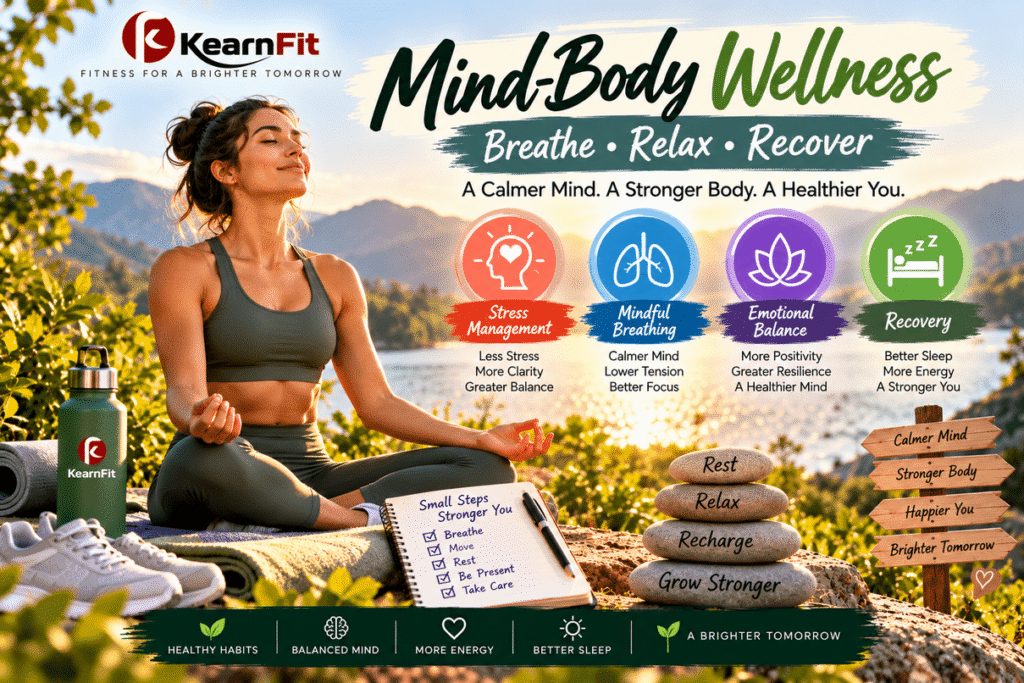
One of the biggest wellness mistakes is believing that progress always requires more effort.
More workouts.
More productivity.
More goals.
More discipline.
More screen time.
More work.
But recovery is not the opposite of progress.
Recovery is part of it.
Your body needs time between demanding physical efforts.
Your mind needs breaks from constant stimulation.
Your emotions need space to settle.
Your nervous system needs opportunities to move out of high-alert states.
Recovery can look different from person to person.
It might mean sleeping longer after a demanding period.
It might mean taking a gentle walk instead of an intense workout.
It might mean spending an afternoon away from work.
It might mean reading.
It might mean being outside.
It might mean connecting with people.
It might mean saying no to something that is not necessary.
It might mean asking for professional help when stress, anxiety, low mood, pain, fatigue, or another concern is interfering with daily life.
Recovery should not become an excuse to avoid movement or responsibility.
Instead, think of it as intelligent pacing.
A strong lifestyle has periods of effort and periods of restoration.
That balance helps prevent the mindset that every day must be a performance.
13. The Mind-Body Connection and a Healthy Lifestyle
A healthy lifestyle is rarely created by one perfect habit.
It is created by the interaction of many ordinary behaviors.
You move.
You eat.
You sleep.
You work.
You rest.
You connect.
You manage stress.
You experience emotions.
You make decisions.
All of these behaviors influence the way your days feel.
That is why the mind-body connection fits naturally into a holistic wellness philosophy.
This broader approach aligns with KearnFit’s four dimensions of fitness, where mental, physical, emotional, and financial wellness work together to create a more complete approach to personal growth.
Instead of separating your goals into completely different categories, look for habits that support multiple areas at once.
A morning walk can support physical activity, mental clarity, natural light exposure, and emotional reset.
Cooking dinner at home can support nutrition, mindfulness, financial awareness, and family connection.
A consistent bedtime can support physical recovery, emotional balance, concentration, and productivity.
A weekend hike with friends can combine movement, nature, social connection, and stress relief.
This approach makes wellness more practical.
You do not need to optimize every part of your life independently.
You can choose simple habits with multiple benefits.
That is one of the most powerful ways to build sustainable wellness.
14. How Busy Professionals Can Strengthen the Mind-Body Connection
Busy professionals often know what they should do but struggle to create enough space to do it.
Meetings fill the calendar.
Deadlines create pressure.
For busy professionals, the Mind-Body Connection is especially important because work pressure can influence both mental wellbeing and physical habits.
Commutes consume time.
Screens follow you from the office to the living room.
And when the day finally ends, exercise, healthy meals, or relaxation may feel like additional responsibilities.
The answer is not necessarily creating a longer wellness checklist.
Instead, integrate wellness into existing routines.
Walk during one meeting when appropriate.
Keep healthy snacks available.
Use stairs when practical.
Take a five-minute movement break between work blocks.
Schedule exercise like an important appointment.
Create a clear transition between work and home.
Avoid checking work messages during your wind-down period when possible.
Use your commute as an opportunity to listen to something calming or educational rather than filling every minute with work.
Take your lunch away from your desk.
Build social connection into your schedule instead of waiting for it to happen.
Most importantly, avoid thinking that a 20-minute workout is worthless because you cannot complete an hour.
Current physical activity guidance emphasizes that activity can be accumulated and that some physical activity is better than none.
Consistency often matters more than creating the perfect schedule.
15. 7 Common Mind-Body Wellness Mistakes to Avoid
Strengthening your mind-body connection does not require perfection, but avoiding common mistakes can make the process easier.
Mistake #1: Treating mental and physical health as separate.
A workout plan without recovery, sleep, and emotional awareness is incomplete.
Mistake #2: Thinking more exercise is always better.
Your body needs recovery. Increase activity progressively and respect your current ability.
Mistake #3: Ignoring sleep.
Sleep should not be treated as optional simply because your schedule is busy.
Mistake #4: Using wellness trends as a substitute for fundamentals.
Fancy products cannot replace consistent movement, nutritious food, sleep, stress management, and connection.
Mistake #5: Expecting instant results.
Healthy habits are built through repetition, not overnight transformation.
Mistake #6: Comparing your routine with someone else’s.
Your schedule, responsibilities, preferences, resources, and health needs are unique.
Mistake #7: Ignoring persistent symptoms.
Wellness practices can support health, but they should not replace professional evaluation when something is concerning or ongoing.
A sustainable wellness routine should feel supportive rather than punishing.
16. A Simple Daily Mind-Body Wellness Routine
You can strengthen the mind-body connection with a routine that takes surprisingly little time.
Here is a simple example:
Morning — 10 to 20 minutes
Start with water and natural light.
Spend a few minutes moving or stretching.
Take several slow breaths.
Identify one important priority for the day.
Avoid immediately filling your attention with notifications.
Midday — 10 to 30 minutes
Eat a balanced meal.
Step away from your workstation.
Take a short walk.
Check your stress and energy levels.
Ask yourself whether you need food, movement, rest, connection, or a change of pace.
Evening — 20 to 30 minutes
Finish work intentionally.
Spend time with someone you care about or engage in a relaxing activity.
Reduce unnecessary screen stimulation.
Prepare for tomorrow.
Before bed — 5 minutes
Take a few slow breaths.
Reflect on one thing you accomplished.
Identify one thing you are grateful for.
Let the day end.
This routine is intentionally simple.
You can adapt it to your schedule, culture, responsibilities, physical ability, and personal preferences.
The objective is not to follow a perfect wellness template.
It is to create repeated opportunities for your mind and body to work together.
17. Your 30-Day Mind-Body Connection Challenge
Want to turn these ideas into action?
By repeating these small actions, you can turn the Mind-Body Connection from an idea into a practical part of your everyday lifestyle.
Try a simple 30-day challenge.
The goal is not to completely transform your lifestyle in one month.
The goal is to become more aware of how your daily behaviors affect the way you feel.
Days 1–5: Notice
Track your sleep, movement, energy, mood, and stress without judging yourself.
Look for patterns.
Days 6–10: Move
Add a manageable amount of daily movement.
A walk is enough to begin.
Days 11–15: Recover
Create a consistent bedtime routine.
Give yourself a genuine opportunity to rest.
Days 16–20: Breathe
Practice two to five minutes of intentional breathing or relaxation each day.
Days 21–25: Connect
Reach out to someone.
Walk with a friend.
Share a meal.
Join a group activity.
Days 26–30: Combine
Create one daily routine that includes at least three mind-body behaviors.
For example:
Walk + healthy meal + five-minute evening reflection.
At the end of the month, ask:
What improved?
What felt difficult?
Which habit was easiest?
Which habit had the biggest positive effect on my day?
What would I like to continue?
The purpose of a challenge is not to create another obligation.
It is to discover what works for you.
18. Signs Your Mind and Body May Need More Attention
Sometimes your body and mind give you signals that your current routine needs adjustment.
You may notice:
- Persistent tiredness
- Frequent difficulty sleeping
- Ongoing stress
- Difficulty concentrating
- Irritability
- Loss of motivation
- Feeling physically tense
- Reduced enjoyment of normal activities
- Difficulty maintaining healthy routines
- Feeling overwhelmed by everyday responsibilities
- Persistent physical symptoms
- Significant changes in appetite or energy
None of these signs automatically identifies a specific cause.
They can have many explanations, including lifestyle factors, stress, medical conditions, medications, sleep problems, or mental health concerns.
The important point is to pay attention rather than automatically dismissing them.
If symptoms are persistent, severe, worsening, or interfering with daily life, consider speaking with an appropriate healthcare professional.
Wellness habits are valuable tools, but they are not a substitute for diagnosis or treatment when medical or mental healthcare is needed.
19. How KearnFit Supports Mind-Body Wellness
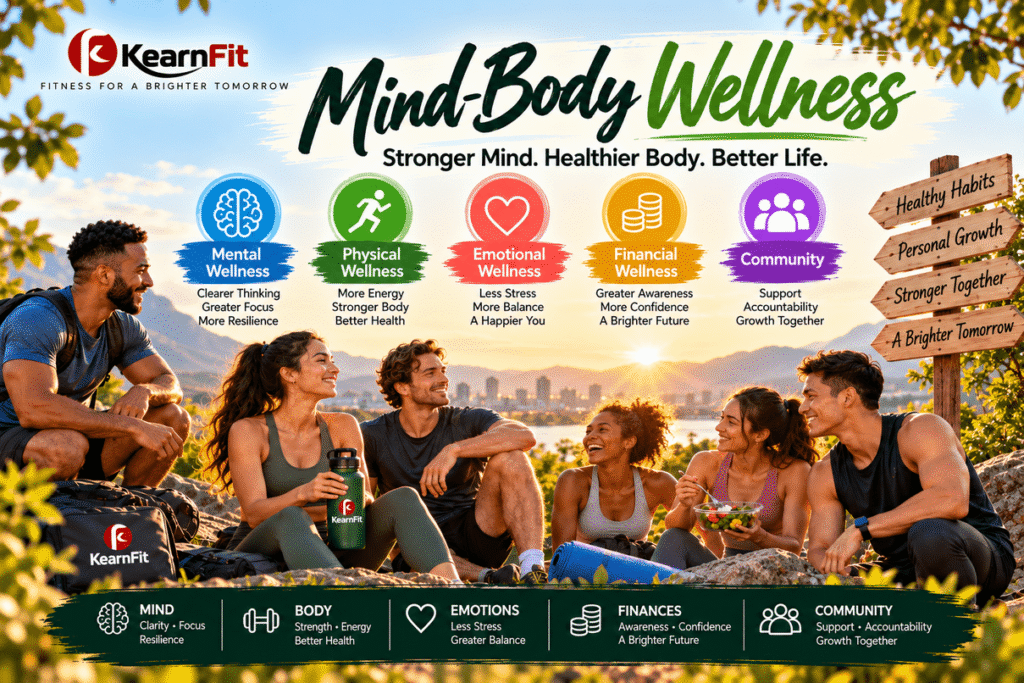
At KearnFit, wellness is bigger than physical fitness. It is part of a broader approach to the four dimensions of fitness, including mental, physical, emotional, and financial wellness.
The mind-body connection fits into a broader approach that recognizes mental, physical, emotional, and financial wellbeing as connected parts of a healthier lifestyle, with community helping people stay supported and accountable.
That means your wellness journey can include:
Mental fitness — developing clarity, focus, resilience, and healthier ways to manage everyday pressure.
Physical fitness — building movement, strength, mobility, endurance, and recovery into your lifestyle.
Emotional wellness — understanding emotions, developing self-awareness, and building healthier relationships with yourself and others.
Financial wellness — creating habits that support greater awareness and confidence around money.
Community — surrounding yourself with people who encourage learning, accountability, connection, and growth.
The advantage of thinking this way is that you do not have to define yourself by one wellness goal.
You can work on becoming stronger physically while also becoming more aware mentally.
You can improve your routines while developing better emotional awareness.
You can pursue personal growth while becoming more financially intentional.
And you can do it alongside a community.
If you want to explore a more complete approach to wellness and personal growth, visit www.kearnfit.com and discover how KearnFit can become part of your journey.
20. Conclusion: Build Strength From the Inside Out
The mind-body connection reminds us that health is not a collection of isolated categories.
Your mind affects the way you experience your body.
Your physical habits can influence your mood, energy, sleep, and ability to manage everyday challenges.
Your emotional wellbeing can shape your routines.
Your routines can shape your physical health.
Your relationships can influence your resilience.
And your recovery can determine how effectively you show up tomorrow.
You do not need to change everything at once.
Start with one habit.
Take a walk.
Get consistent sleep.
Eat a nourishing meal.
Pause and breathe.
Talk to someone you trust.
Create a realistic routine.
Give yourself permission to recover.
Then repeat.
Over time, these small actions can become a lifestyle that supports more than physical fitness.
They can help you build greater awareness, resilience, energy, balance, and confidence.
The goal is not perfection.
The goal is progress that supports the whole person.
Because when your mind and body work together, wellness becomes more than something you pursue.
It becomes something you practice every day.
Build your mind. Strengthen your body. Support your emotions. Grow your life.
Discover more wellness and personal growth resources with KearnFit at www.kearnfit.com.