1. What Does a Healthy Lifestyle on a Budget Really Mean?
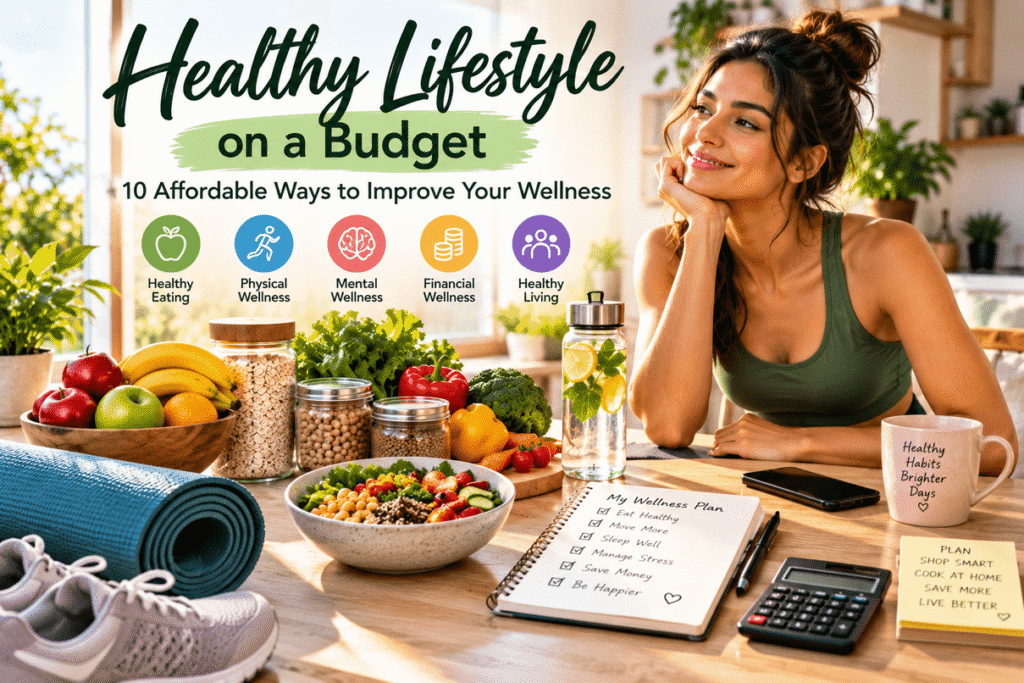
When people hear the phrase healthy lifestyle, they may imagine expensive gym memberships, premium organic foods, fitness trackers, supplements, wellness retreats, personal trainers, meal-delivery subscriptions, and a perfectly designed home workout space.
But none of those things are requirements for building a healthier life.
A healthy lifestyle on a budget is about making choices that support your wellbeing while respecting your financial reality.
A Healthy Lifestyle on a Budget does not require a complete lifestyle makeover. Small decisions—such as planning meals, walking regularly, getting enough sleep, and setting simple financial goals—can gradually create a healthier and more sustainable daily routine.
That might mean:
- Cooking simple meals at home.
- Buying seasonal produce.
- Choosing beans, lentils, eggs, grains, and other practical staples.
- Walking instead of driving when practical.
- Exercising at home.
- Using public parks.
- Going to bed consistently.
- Spending less time scrolling.
- Connecting with friends instead of always paying for entertainment.
- Planning purchases instead of making impulse purchases.
- Creating a simple savings habit.
- Learning instead of constantly buying.
- Using what you already own.
The goal is not to make wellness cheap at all costs.
The goal is to make wellness sustainable.
Because financial stress can itself become a barrier to healthy choices.
If your wellness routine requires you to spend more money than you can comfortably afford, it may create additional pressure rather than improving your overall wellbeing.
A healthier approach is to ask:
“What can I do consistently with the resources I already have?”
That question can completely change how you think about wellness.
2. Can Wellness Really Be Affordable?
Absolutely.
Some of the most valuable wellness habits cost little or nothing.
Walking is free.
Stretching can be free.
The key to maintaining a Healthy Lifestyle on a Budget is choosing habits that fit both your wellness goals and your financial reality. Instead of copying expensive wellness trends, focus on affordable habits you can repeat consistently.
Sleeping does not require a subscription.
Journaling can be done with a basic notebook.
Cooking simple meals can reduce dependence on expensive convenience food.
Calling a friend can cost nothing.
Spending time outdoors can be free.
Learning can often be done through books, libraries, community resources, or free educational platforms.
Meditation does not require an expensive studio.
And financial planning starts with awareness rather than spending.
The key is understanding the difference between wellness behavior and wellness products.
A product can support a habit.
But the product is not the habit.
A $100 pair of running shoes may be useful if you need them.
But walking itself does not require an expensive fitness subscription.
A premium meal plan can be convenient.
But a simple bowl of lentils, vegetables, and grains can also be part of a nourishing meal.
A fitness tracker can provide data.
But you can also track a walk using your own routine or a simple notebook.
A beautiful journal may feel motivating.
But a basic notebook can still hold your thoughts.
Wellness begins with behavior.
Products come second.
3. Why Expensive Does Not Always Mean Healthier
Modern wellness marketing can make healthy living seem more complicated than it really is.
You may see:
- Premium supplements.
- Specialized drinks.
- Designer activewear.
- Boutique fitness classes.
- Expensive kitchen appliances.
- Luxury wellness retreats.
- Subscription-based meal plans.
- High-end fitness equipment.
Some products may genuinely provide value.
But higher price does not automatically equal better health.
A more expensive food is not automatically more nutritious.
A more expensive workout is not automatically more effective.
A Healthy Lifestyle on a Budget is ultimately about making thoughtful choices that support your wellbeing without assuming that higher prices automatically mean better results.
A more expensive wellness product is not automatically more necessary.
The important question is:
“Does this purchase meaningfully support my goals?”
If the answer is yes and the purchase fits your budget, it may be worthwhile.
If the answer is no, you can confidently skip it.
A healthy lifestyle should not force you into financial stress.
In fact, financial awareness should be part of your definition of wellness.
That is especially important at KearnFit, where fitness goes beyond the physical dimension.
Your financial wellbeing matters too.
4. The Connection Between Wellness and Financial Health
Your health and your finances are not completely separate parts of life.
They influence one another.
Financial stress can affect your choices.
Health-related expenses can affect your budget.
Food costs influence your meal decisions.
Transportation costs influence your ability to access activities.
Work schedules influence your sleep and meal routines.
That means financial wellness deserves a place in a holistic lifestyle.
Building a Healthy Lifestyle on a Budget starts in the grocery store. Compare prices, plan meals around affordable staple foods, use seasonal produce, and prepare meals at home when practical. These simple strategies can make healthy eating more manageable.
Instead of thinking:
“I need to spend more money to become healthier,”
try thinking:
“I need to use my money more intentionally to support my wellbeing.”
That could mean spending more on groceries while spending less on takeout.
It could mean investing in a good pair of shoes instead of a costly gym membership.
It could mean purchasing quality ingredients while reducing impulse snacks.
It could mean setting aside a small amount for future health-related expenses.
It could mean creating an emergency fund so unexpected costs are less disruptive.
A healthy lifestyle on a budget is therefore not about spending as little as possible.
It is about spending according to your priorities.
5. 10 Affordable Ways to Improve Your Wellness
You can build a Healthy Lifestyle on a Budget without paying for an expensive fitness membership. Walking, running, bodyweight exercises, stretching, outdoor activities, and free online workouts can all become part of an active routine.
Here are 10 practical strategies to build a healthier lifestyle without turning wellness into an expensive project:
- Plan your meals before shopping.
- Build meals around affordable nutrient-rich foods.
- Cook more meals at home.
- Choose free or low-cost exercise.
- Make sleep part of your wellness budget.
- Practice low-cost mental and emotional self-care.
- Reduce unnecessary digital and lifestyle spending.
- Use community to make wellness more affordable.
- Build a simple financial wellness routine.
- Invest in habits instead of expensive trends.
These strategies are flexible.
You can adapt them to your income, location, culture, household size, dietary needs, schedule, and lifestyle.
You do not need to implement all 10 immediately.
Start with one.
Then build.
The goal is sustainable progress.
6. Strategy #1: Plan Your Meals Before You Shop
One of the easiest ways to spend less on food is to stop deciding what to eat after you are already hungry.
Planning gives you structure.
Before going grocery shopping, ask:
What meals do I need this week?
Then make a list.
For example:
Breakfast: oats, fruit, eggs
Lunch: rice, vegetables, lentils
Dinner: potatoes, vegetables, beans or another protein
Snacks: fruit, yogurt, roasted chickpeas, nuts where affordable
You do not need a complicated meal-prep system.
You simply need enough structure to avoid unnecessary purchases.
The CDC recommends planning recipes, shopping with a list, using common ingredients across meals, stretching recipes, and considering frozen or canned foods when appropriate.
You can make one ingredient work across multiple meals.
For example, cooked vegetables can appear in:
- Breakfast wraps.
- Lunch bowls.
- Dinner stir-fries.
- Soups.
- Side dishes.
A batch of beans or lentils can become:
- Dal.
- Soup.
- Salad topping.
- Wrap filling.
- Rice bowl.
This approach reduces waste.
It also reduces decision fatigue.
And fewer unnecessary grocery trips can mean fewer opportunities for impulse purchases.
7. Strategy #2: Build Meals Around Affordable Nutrient-Rich Foods
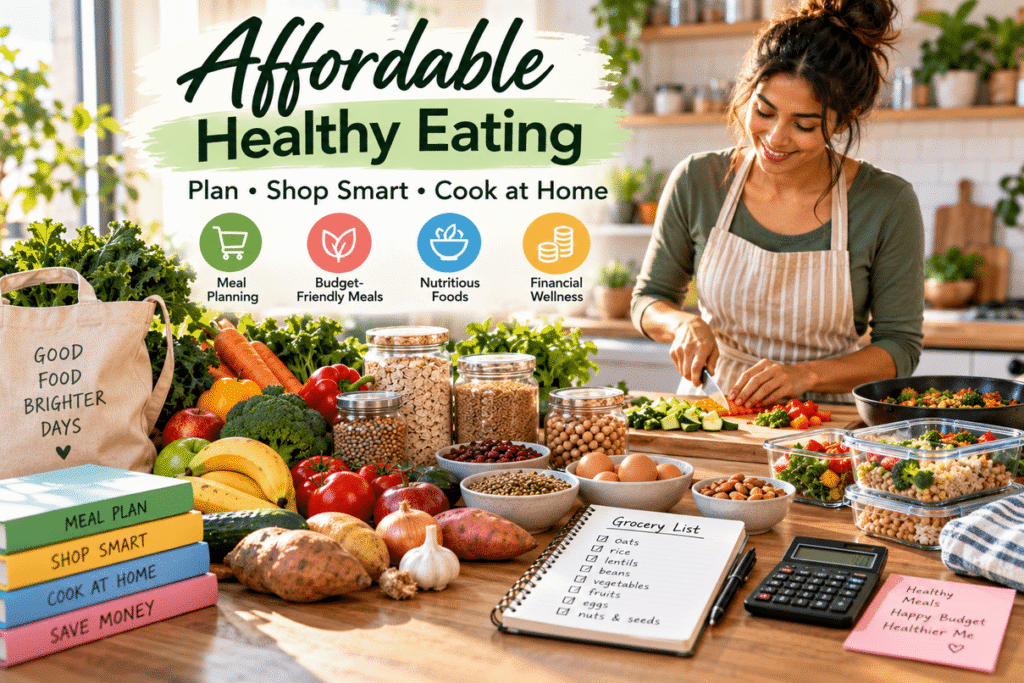
Healthy food does not have to mean premium food.
A Healthy Lifestyle on a Budget should also include habits that support rest and recovery. Creating a consistent sleep schedule, reducing unnecessary evening screen time, and making your bedroom comfortable can support a simple wellness routine without requiring expensive products.
Some affordable staples can be extremely useful in a balanced eating pattern.
Depending on your preferences and dietary needs, consider:
- Beans.
- Lentils.
- Chickpeas.
- Eggs.
- Oats.
- Rice.
- Potatoes.
- Whole grains.
- Seasonal vegetables.
- Bananas.
- Apples.
- Frozen vegetables.
- Canned vegetables with appropriate labels.
- Yogurt.
- Seeds.
- Peanuts.
- Tofu.
- Other locally available protein sources.
The exact foods you choose will depend on where you live and what is affordable locally.
The CDC notes that frozen and canned fruits and vegetables can be practical options, and advises checking labels for added sugars, salt, or syrup where relevant.
A useful strategy is to build meals around a few categories:
Protein
Beans, lentils, eggs, dairy, tofu, poultry, fish, nuts, seeds, or other suitable choices.
Carbohydrates
Rice, oats, potatoes, whole grains, or other staple foods.
Vegetables and Fruits
Fresh, frozen, seasonal, or appropriate canned options.
Healthy Fats
Nuts, seeds, oils, or other suitable foods.
This gives you flexibility.
You do not need the same expensive “superfood” every week.
8. Strategy #3: Cook More Meals at Home
Cooking at home can give you greater control over ingredients, portions, and spending.
But that does not mean you need to cook elaborate meals every night.
Keep it simple.
Choose meals with five or fewer main ingredients.
For example:
Vegetable rice bowl
Rice + mixed vegetables + eggs or lentils + spices.
Simple lentil soup
Lentils + vegetables + herbs + spices.
Oats breakfast
Oats + banana + seeds or nuts.
Egg and vegetable meal
Eggs + vegetables + toast or another suitable grain.
Chickpea salad
Chickpeas + vegetables + herbs + simple dressing.
The goal is not culinary perfection.
The goal is reliable food.
You can also batch-cook.
Prepare enough for two or three meals.
This saves time and can reduce the temptation to order expensive food when you are tired.
If cooking feels overwhelming, start with one homemade meal per day.
Then increase when it feels manageable.
Cooking at home can make a Healthy Lifestyle on a Budget easier to maintain because you have more control over ingredients, portions, and how often you eat out.
9. Strategy #4: Choose Free or Low-Cost Exercise
You do not need a premium gym membership to become more active.
Walking is one of the simplest options.
Mental and emotional wellbeing are important parts of a Healthy Lifestyle on a Budget. Journaling, spending time outdoors, practicing mindfulness, talking with supportive people, and making time for enjoyable activities can be simple ways to care for yourself.
You can walk:
- Around your neighborhood.
- In a public park.
- On a safe walking route.
- During a lunch break.
- While speaking on the phone.
- With friends.
- With family.
- While exploring your city.
You can also exercise at home.
Bodyweight movements such as squats, lunges, push-ups adapted to your ability, planks, and other movements can be incorporated into a routine.
You can use stairs.
Dance.
Cycle.
Play a sport.
Practice yoga or mobility exercises.
The CDC recommends that adults aim for at least 150 minutes of moderate-intensity physical activity each week and muscle-strengthening activities on at least two days. The activity can be divided into smaller periods, and some activity is better than none.
That does not mean you need to spend money to reach those targets.
For example:
Monday: 30-minute brisk walk
Tuesday: 20-minute home strength session
Wednesday: 30-minute walk
Thursday: 20-minute home workout
Friday: 30-minute walk
Saturday: Outdoor activity
Sunday: Gentle movement
Your exact plan can vary.
Choose activities that match your abilities and that you actually enjoy.
If you have a chronic condition, disability, or other health concern, seek appropriate professional guidance about the type and amount of activity that is right for you.
10. Strategy #5: Make Sleep Part of Your Wellness Budget
Sleep is one of the most affordable wellness investments available.
Yet people often sacrifice it because they believe productivity requires more waking hours.
You do not need to purchase an expensive sleep system to start improving your routine.
Focus on the basics.
Create a consistent bedtime.
Quality sleep is one of the simplest ways to support a Healthy Lifestyle on a Budget, because better rest does not require expensive wellness products.
Create a consistent wake-up time.
Make your bedroom comfortable.
Reduce unnecessary evening stimulation.
Give yourself enough time to sleep.
The CDC notes that most adults need at least seven hours of sleep and recommends consistent sleep and wake times as part of healthy sleep habits.
Think about how much you spend trying to improve energy:
Coffee.
Energy drinks.
Supplements.
Products.
Apps.
Now compare that with the simple habit of protecting your sleep opportunity.
Your budget-friendly sleep routine might be:
10:00 p.m. — Reduce unnecessary screen use
10:15 p.m. — Prepare for tomorrow
10:30 p.m. — Read or relax
11:00 p.m. — Sleep
The exact times should fit your life.
The principle is consistency.
11. Strategy #6: Practice Low-Cost Mental and Emotional Self-Care
Self-care has become a major commercial category.
But self-care does not need to mean expensive spa appointments, luxury products, or weekend retreats.
Try free or low-cost options first.
A Healthy Lifestyle on a Budget can become more enjoyable when you involve other people. Walking with friends, preparing meals together, joining free community activities, or sharing wellness goals can provide connection and accountability without adding significant costs.
Journaling
Write down what you are thinking.
Walking
Use movement and outdoor time as a reset.
Breathing
Take a few slow breaths between stressful tasks.
Reading
Use books you already own or borrow from a library.
Music
Create a playlist that helps you relax.
Nature
Spend time outdoors.
Connection
Talk to someone you trust.
Reflection
Spend a few minutes asking yourself what you need.
Creative Activities
Draw, cook, write, photograph, garden, or make something.
The goal is not to escape every difficult emotion.
It is to create healthy ways of processing everyday stress.
If you are dealing with persistent or severe mental health concerns, low-cost self-care should not replace appropriate professional support.
Wellness includes knowing when to seek additional help.
12. Strategy #7: Reduce Unnecessary Digital and Lifestyle Spending
Sometimes the easiest way to improve your wellness budget is to stop paying for things you do not use.
Review your recurring expenses.
Look at:
- Streaming subscriptions.
- Fitness apps.
- Meal subscriptions.
- Online shopping memberships.
- Unused courses.
- Duplicate services.
- Apps you rarely open.
Ask:
“Does this expense still support my life?”
If not, consider cancelling it.
You can also create a 24-hour rule for non-essential purchases.
When you want something, wait 24 hours before buying it.
For larger purchases, wait longer.
This can reduce impulse spending.
You can also replace expensive entertainment with low-cost alternatives.
Instead of an expensive restaurant:
Cook with friends.
Instead of a paid class:
Try a free community activity.
Instead of shopping:
Go for a walk.
Instead of another subscription:
Borrow a book.
Instead of scrolling:
Meet someone.
The goal is not deprivation.
It is intentionality.
13. Strategy #8: Use Community to Make Wellness More Affordable
Community can be one of the most underrated wellness resources.
You do not have to purchase everything individually.
You can share experiences.
Walk with friends.
Cook together.
Exchange recipes.
Join community sports.
Explore public parks.
Attend free events.
Participate in local groups.
Exercise with a friend.
Share accountability.
Learn together.
Community also makes healthy activities more enjoyable.
A 30-minute walk alone is useful.
A 30-minute walk with someone you care about can also become meaningful social time.
A home-cooked meal can become a shared experience.
A free outdoor workout can become a community activity.
This is where wellness and connection overlap.
At KearnFit, community is part of the broader wellness philosophy because personal growth does not always have to happen in isolation.
You can learn from others.
Encourage others.
Be encouraged.
Share progress.
And create healthier habits together.
14. Strategy #9: Build a Simple Financial Wellness Routine
A healthy lifestyle on a budget needs a budget.
You do not need an advanced spreadsheet.
Start with a simple weekly check-in.
Ask:
What did I spend?
What surprised me?
What could I reduce?
What do I want to save for?
What wellness-related spending actually added value?
Then categorize your expenses.
Needs
Housing, food, transportation, essential bills.
Goals
Savings, debt reduction, education, future plans.
Wellness
Exercise, healthy food, healthcare, recreation, or other priorities.
Lifestyle
Entertainment, shopping, dining out, subscriptions.
The purpose is not to judge yourself.
It is to understand your money.
Awareness creates options.
Once you know where your money goes, you can decide whether your spending reflects your priorities.
Perhaps you discover that you spend more on convenience food than you realized.
Perhaps several subscriptions are barely used.
Perhaps a small recurring expense could be redirected toward groceries or savings.
Financial wellness begins with awareness.
Financial awareness is an important part of a Healthy Lifestyle on a Budget, because sustainable wellness should support both your personal wellbeing and your financial priorities.
15. Strategy #10: Invest in Habits Instead of Expensive Trends
Wellness trends come and go.
One month it is a particular diet.
The next month it is a new workout.
Then a new supplement.
Then a new productivity system.
Then another wellness gadget.
You do not need to chase every trend.
Instead, invest in habits.
A good pair of walking shoes may support a habit.
A reusable water bottle may make hydration easier.
A basic resistance band may support home workouts.
A notebook may support reflection.
A kitchen container may make meal preparation easier.
These are tools.
The habit is the real investment.
Ask:
“Will I still use this six months from now?”
If yes, it may be worth considering.
If you are buying something because everyone online has it, pause.
Your wellness budget should support your actual lifestyle.
Not someone else’s.
16. How to Eat Healthy on a Tight Grocery Budget
A tight grocery budget does not mean giving up on nutrition.
It means becoming more strategic.
Start with a list of affordable staples.
These practical food choices make it easier to maintain a Healthy Lifestyle on a Budget without sacrificing variety or enjoyment.
For example:
Grains: rice, oats, whole grains, pasta where appropriate.
Protein: lentils, beans, chickpeas, eggs, tofu, yogurt, or other affordable options.
Vegetables: seasonal vegetables, frozen vegetables, local produce.
Fruit: seasonal fruit and affordable staples.
Flavor: herbs, spices, onions, garlic, and other inexpensive ingredients that make simple meals enjoyable.
Then plan meals around those ingredients.
The CDC recommends shopping with a list, considering frozen or canned produce, using store brands where available, and stretching recipes across multiple meals as ways to make healthy eating more affordable.
You can also reduce waste.
Before shopping, check:
What do I already have?
Then build meals around those ingredients.
This simple habit can prevent buying duplicates.
And remember:
Healthy eating does not require every item to be premium.
A balanced pattern can be built from ordinary foods.
17. Affordable Breakfast Ideas
Breakfast can become expensive when it relies on packaged convenience foods or frequent restaurant purchases.
Instead, build simple options.
Oats + Fruit
Affordable, easy, customizable.
Eggs + Vegetables
A practical protein-rich meal for those who eat eggs.
Yogurt + Fruit + Seeds
Simple and flexible.
Banana + Peanut Butter + Oats
An easy combination when these foods fit your dietary needs.
Vegetable Poha
An affordable option that can include vegetables and other additions.
Idli + Sambar
A practical combination that can be adapted to your preferences.
Leftovers
There is no rule saying breakfast has to be a special food category.
A nutritious leftover meal can work too.
The best breakfast is not the one with the most expensive ingredients.
It is the one that works for your needs, budget, preferences, and schedule.
18. Affordable Lunch and Dinner Ideas
Simple meals can be satisfying.
Try building meals using a basic formula:
Staple + Protein + Vegetables + Flavor
For example:
Rice + lentils + vegetables + spices
Potatoes + beans + vegetables + herbs
Whole grain + eggs + vegetables + dressing
Rice + tofu + mixed vegetables + spices
Pasta + beans + vegetables + tomato-based sauce
Chickpeas + vegetables + grains + yogurt
You can make one large batch and use it in different ways.
For example, cooked chickpeas can become:
Day 1: Chickpea bowl.
Day 2: Chickpea salad.
Day 3: Chickpea curry.
The same basic ingredient can feel different when you change the seasoning.
This is where spices become powerful budget tools.
You do not need dozens of expensive sauces.
A few versatile herbs and spices can transform basic ingredients.
19. Affordable Snacks and Drinks
Snacking can quietly increase your food budget.
Packaged snacks and drinks may seem inexpensive individually, but frequent purchases can add up.
Try keeping simple options available.
Depending on your needs:
- Whole fruit.
- Yogurt.
- Roasted chickpeas.
- Peanuts.
- Nuts in appropriate portions.
- Homemade popcorn.
- Vegetable sticks.
- Leftovers.
- Oats-based snacks.
- Homemade smoothies.
For drinks, water is often the simplest everyday option.
You can also add lemon, mint, or fruit for variety if you enjoy it.
The goal is not to eliminate every enjoyable snack.
It is to make affordable options convenient.
If healthier options are ready to eat, you are less likely to rely on expensive convenience food every time hunger appears.
20. How to Exercise Without an Expensive Gym Membership
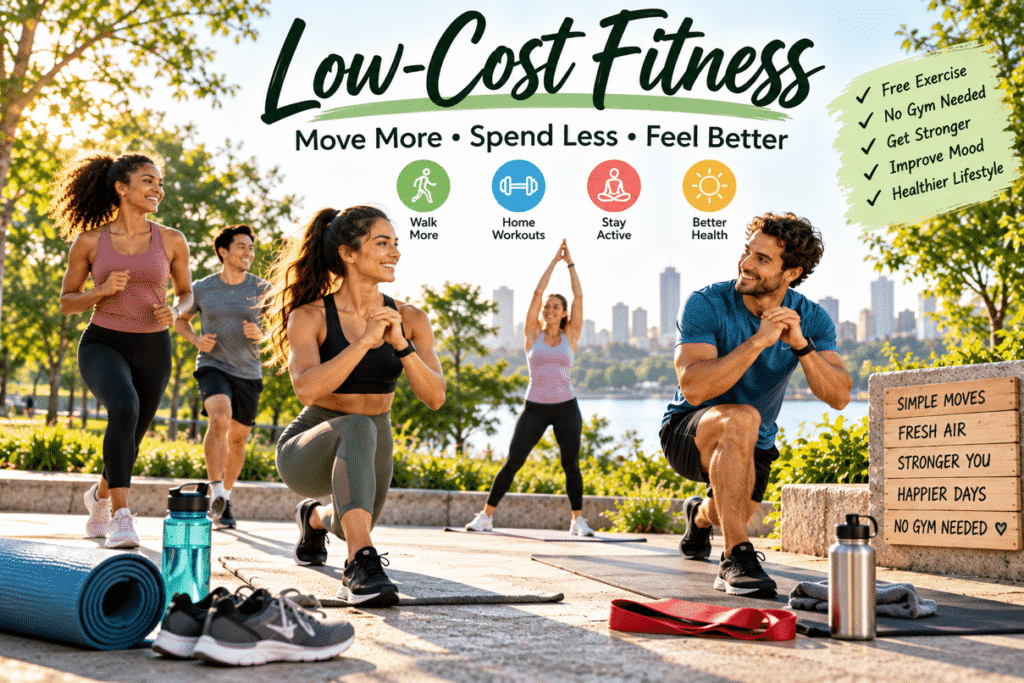
A gym can be useful.
But it is not mandatory.
Create a home fitness menu.
These simple options show that a Healthy Lifestyle on a Budget can include regular movement without expensive equipment or memberships.
Cardio
Walking, jogging, dancing, cycling, stairs.
Strength
Bodyweight exercises, resistance bands, household alternatives used safely.
Mobility
Stretching and mobility exercises.
Recovery
Walking, gentle movement, rest, and sleep.
You can also use public spaces.
Parks.
Walking trails.
Community sports areas.
Outdoor stairs.
Open spaces.
A simple weekly routine might be:
Monday: Brisk walk
Tuesday: Home strength
Wednesday: Walk
Thursday: Mobility
Friday: Home strength
Saturday: Longer outdoor activity
Sunday: Recovery
You can gradually build toward recommended weekly activity levels.
The CDC emphasizes that physical activity can be accumulated in smaller chunks and that some activity is better than none.
The biggest advantage of low-cost exercise is not the money saved.
It is flexibility.
You can exercise almost anywhere.
21. How to Build a Budget-Friendly Morning Routine
Your morning routine does not need expensive wellness products.
A simple morning routine can become a powerful foundation for a Healthy Lifestyle on a Budget, especially when your habits rely on consistency rather than expensive products.
Try:
Wake up: Consistent schedule.
Hydrate: Drink water.
Move: Walk or stretch.
Reflect: Journal or sit quietly.
Nourish: Prepare a simple meal if breakfast suits you.
Plan: Choose your top three priorities.
Connect: Say hello to someone you care about.
This routine could cost almost nothing.
The value comes from repetition.
You are investing time rather than constantly spending money.
You can also prepare the night before.
Put your walking shoes near the door.
Prepare breakfast ingredients.
Fill your water bottle.
Write tomorrow’s priorities.
A few minutes of preparation can make the morning easier.
22. How to Create Affordable Wellness for Busy Professionals
Busy professionals often spend money because they are short on time.
Takeout.
Delivery.
Convenience snacks.
Subscriptions.
Ride services.
Last-minute purchases.
Sometimes those expenses are necessary.
But sometimes planning can reduce them.
Try a weekly “wellness preparation hour.”
Use that hour to:
- Plan meals.
- Prepare some ingredients.
- Schedule workouts.
- Review your calendar.
- Check your spending.
- Prepare snacks.
- Organize your work bag.
- Plan one social activity.
- Set your sleep target.
This small investment of time can make the week smoother.
You do not need to prepare seven perfect meals.
You might simply cook one grain, one protein source, and several vegetables.
Then combine them differently throughout the week.
Similarly, you do not need seven intense workouts.
Schedule a few realistic movement sessions and add walking where possible.
Wellness becomes more affordable when it becomes more organized.
23. 7 Budget Wellness Mistakes to Avoid
Mistake #1: Believing Healthy Means Expensive
Many healthy habits are free.
Mistake #2: Buying Before Planning
Plan meals and routines before purchasing products.
Mistake #3: Chasing Wellness Trends
Do not confuse popularity with necessity.
Mistake #4: Buying Too Much Food
Waste is expensive.
Buy quantities you can realistically use.
Mistake #5: Ignoring Free Resources
Parks, libraries, community events, public spaces, and free educational resources can support wellness.
Mistake #6: Comparing Your Budget
Someone else’s wellness lifestyle may have completely different financial circumstances.
Mistake #7: Cutting Essential Health Spending
Budgeting does not mean ignoring important healthcare, nutritious food, necessary medications, appropriate equipment, or professional support.
The goal is smarter spending.
Not spending as little as possible.
Avoiding these common mistakes can help you create a Healthy Lifestyle on a Budget that feels realistic, sustainable, and personally meaningful.
24. How to Stay Healthy Without Comparing Your Lifestyle

Social media can make wellness look expensive.
You may see:
Luxury gyms.
Perfect kitchens.
Expensive smoothies.
Designer workout clothes.
Wellness retreats.
Huge home gyms.
Beautiful meal-prep containers.
The problem is that you are seeing someone else’s presentation.
Your wellness journey is different.
You do not need their equipment.
You need your habits.
Maybe your workout is walking around your neighborhood.
Maybe your breakfast is oats and bananas.
Maybe your gym is your living room.
Maybe your meditation space is a quiet corner.
Maybe your community is three close friends.
Maybe your financial goal is simply building a small emergency fund.
That still counts.
A healthy lifestyle should be measured by how well it supports your life.
Not by how impressive it looks online.
25. Your 30-Day Healthy Lifestyle on a Budget Challenge
Ready to put the ideas into practice?
Try this 30-day challenge.
Days 1–3: Track Your Spending
Write down what you spend.
Do not judge.
Observe.
Days 4–6: Plan Your Meals
Choose several simple meals for the coming week.
Days 7–9: Shop With a List
Avoid unnecessary purchases.
Use what you already have first.
Days 10–12: Cook at Home
Prepare at least one more meal at home than you normally would.
Days 13–15: Add Free Movement
Walk, stretch, dance, or exercise at home.
Days 16–18: Improve Sleep
Choose a realistic bedtime and wake-up schedule.
Days 19–21: Reduce One Unnecessary Expense
Cancel or reduce something that no longer adds value.
Days 22–24: Connect
Spend time with someone you care about without making expensive entertainment necessary.
Days 25–27: Practice Low-Cost Self-Care
Journal.
Walk.
Read.
Reflect.
Spend time outside.
Days 28–30: Review
Ask:
What saved money?
What improved my wellbeing?
What felt sustainable?
What was difficult?
What will I continue?
At the end of 30 days, you should not be trying to become a completely different person.
You should have a clearer understanding of which affordable habits work for you.
Remember that a Healthy Lifestyle on a Budget should be based on your own needs, priorities, resources, and realistic daily habits—not someone else’s lifestyle.
26. How KearnFit Can Help You Build Sustainable Wellness
At KearnFit, we believe wellness should be accessible, practical, and holistic.
Your physical fitness matters.
But so does your mental fitness.
Your emotional wellbeing.
Your financial wellness.
And your community.
That is why the KearnFit philosophy goes beyond the traditional idea that being fit simply means exercising.
A healthier lifestyle can involve:
Mental Fitness: Learning, reflection, focus, resilience, and healthy stress management.
Physical Fitness: Movement, strength, mobility, nutrition, sleep, and recovery.
Emotional Fitness: Self-awareness, emotional expression, healthy relationships, and personal reflection.
Financial Fitness: Intentional spending, planning, saving, and understanding your financial priorities.
Community: Connection, accountability, shared learning, and meaningful relationships.
And the beautiful part is that many of these practices do not require significant spending.
You can walk with a friend.
Cook together.
Learn together.
Share accountability.
Explore a public park.
Build healthy habits together.
Talk about financial goals.
Encourage one another.
Wellness can become a community experience.
That is one of the ideas KearnFit wants to make easier: building a stronger life without believing that personal growth has to be expensive.
Your resources may change.
Your schedule may change.
Your goals may change.
Your routine can adapt.
Start with what you have.
Use what is available.
Spend intentionally.
Build consistently.
And keep growing.
Explore more wellness resources and connect with the KearnFit community at www.kearnfit.com.
27. Conclusion: Better Wellness Does Not Have to Cost More
A healthier lifestyle is not reserved for people with unlimited budgets.
You do not need expensive equipment.
You do not need premium groceries.
You do not need a luxury gym.
You do not need every wellness product on the market.
You need practical habits.
Plan your meals.
Shop with intention.
Choose affordable nutritious foods.
Cook at home more often.
Walk.
Move.
Sleep.
Rest.
Reflect.
Connect.
Review your finances.
Use your community.
And spend money on the things that genuinely support your wellbeing.
A healthy lifestyle on a budget is not about deprivation.
It is about priorities.
It means understanding that your wellbeing has value while also recognizing that your financial resources are limited and deserve attention.
The goal is not to spend nothing.
The goal is to spend intentionally.
If a gym membership brings value and fits your budget, use it.
If walking outdoors works better, walk.
If a meal-delivery service saves you time and fits your finances, it may be useful.
If cooking simple meals works better, cook.
There is no single correct version of wellness.
There is only the version that fits your needs, circumstances, goals, and values.
Start small.
Choose one affordable habit.
Repeat it.
Then build another.
Over time, the little things add up.
A walk becomes a routine.
Meal planning becomes normal.
Cooking becomes easier.
Sleep becomes protected.
Spending becomes more intentional.
Community becomes stronger.
And wellness becomes part of your lifestyle rather than another expensive project.
At KearnFit, we believe becoming healthier is about becoming stronger across multiple dimensions of life.
Mind. Body. Emotions. Finances. Community.
You do not have to improve everything today.
Just take the next practical step.
Build wellness that fits your life. Build habits that fit your budget. Build a stronger future with KearnFit.
Visit www.kearnfit.com and continue your journey toward holistic wellness.