1. What Is a Balanced Life?
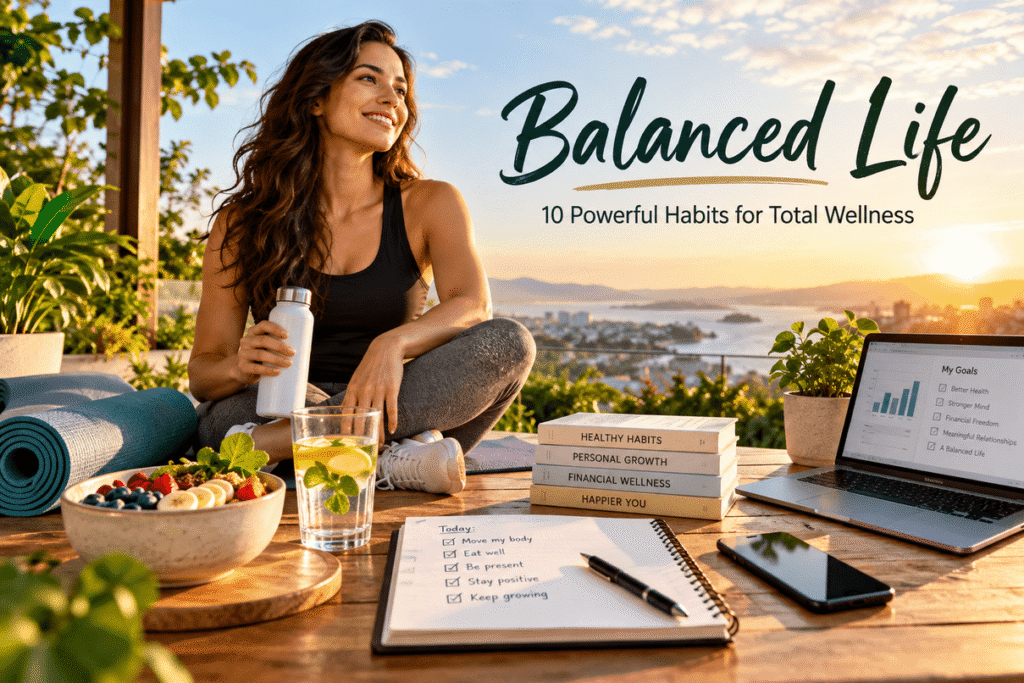
A balanced life is not a perfect life.
It does not mean every area of your life receives exactly the same amount of attention every day. It means creating a lifestyle where your most important needs, responsibilities, relationships, goals, and wellbeing receive intentional attention over time.
A balanced life is built through consistent choices that support your overall wellbeing. Rather than trying to change everything at once, focus on practical habits that make your balanced life healthier, more sustainable, and easier to maintain.
Some days may be focused heavily on work.
Other days may require more rest.
There may be periods when your physical health becomes your priority, while at another point you may need to focus more on your emotional wellbeing, relationships, finances, or personal growth.
That is normal.
Balance is not about keeping everything equal.
It is about knowing what matters, understanding what needs attention, and making thoughtful choices that support your overall wellbeing.
This is where total wellness becomes important.
Instead of thinking about health as simply exercise and nutrition, consider the bigger picture.
Your mental wellbeing matters.
Your physical health matters.
Your emotional health matters.
Your financial habits matter.
Your relationships matter.
Your sleep matters.
Your environment matters.
Your personal growth matters.
When these areas begin working together, you can create a lifestyle that feels more sustainable and fulfilling.
For KearnFit, this broader perspective is at the heart of wellness.
True fitness is not only about how strong your body is.
It is also about how you think, how you manage emotions, how you handle your finances, how you connect with others, and how intentionally you build your future.
2. Why Total Wellness Matters

Modern life makes imbalance easy.
Building a balanced life starts with understanding that wellness is not a single destination. It is an ongoing process of making choices that support your health, relationships, goals, and overall quality of life.
You can spend eight hours working, several hours commuting, another few hours looking at screens, and still feel like there is not enough time for yourself.
You may know that exercise is important but struggle to fit it into your schedule.
You may understand the value of healthy eating but rely on convenient food when your calendar becomes busy.
You may want better sleep but continue checking your phone late at night.
You may want to save money but find it difficult to track spending.
You may want meaningful relationships but keep postponing time with people you care about.
These challenges are not necessarily caused by a lack of knowledge.
Often, they are caused by a lack of systems.
That is why building wellness habits matters.
A habit turns an intention into a repeated action.
Instead of constantly asking yourself whether you should exercise, you create a regular movement routine.
Instead of deciding what to eat at the last minute, you prepare a few simple meals.
Instead of thinking about money only when there is a problem, you schedule a weekly financial check-in.
Instead of waiting until you feel overwhelmed, you create regular opportunities to rest and reflect.
Small systems make healthy choices easier to repeat.
The goal is not to create an impossibly perfect routine.
The goal is to create a realistic lifestyle that can survive busy weeks, unexpected challenges, travel, social events, work pressure, and changing priorities.
3. 10 Powerful Habits for a Balanced Life
If you want to build a healthier and more balanced lifestyle, start with these 10 powerful habits:
1. Start your day with intention.
2. Move your body every day.
3. Build better nutrition habits.
4. Prioritize sleep and recovery.
5. Strengthen your mental fitness.
6. Develop emotional wellness.
7. Improve your financial fitness.
8. Build meaningful relationships.
9. Create healthy digital boundaries.
10. Make personal growth a daily habit.
These habits cover multiple dimensions of wellness rather than focusing on only one.
The key to creating a balanced life is not doing everything perfectly. It is about making small, intentional improvements across the areas that matter most and turning those improvements into sustainable daily habits.
You do not have to adopt all 10 at once.
In fact, starting with one or two habits may make your progress more sustainable.
Choose the habits that address your biggest current needs.
Then gradually build from there.
4. Habit #1: Start Your Day With Intention
How you start your morning can influence how you approach the rest of your day.
Many people wake up and immediately enter reaction mode.
The phone is checked.
Notifications appear.
Messages arrive.
Work begins.
Social media fills the first few minutes.
Before you have decided what matters, somebody else’s priorities may already be competing for your attention.
An intentional morning can create a different starting point.
It does not need to be a two-hour routine.
You could start with something as simple as drinking water, opening the curtains, stretching for a few minutes, taking a short walk, writing down your priorities, or sitting quietly before looking at your phone.
The purpose is not to create a picture-perfect morning.
The purpose is to create awareness.
Ask yourself:
What matters most today?
What do I need to accomplish?
How do I want to feel?
What is one healthy choice I can make today?
These questions can help you shift from automatic behavior toward intentional action.
You can also use your morning to identify one priority in each area of wellness.
Maybe your mental priority is completing an important task.
Your physical priority could be taking a walk.
Your emotional priority might be having an honest conversation.
Your financial priority could be reviewing a payment.
Your community priority could be checking in with a friend.
Small decisions can create direction.
And direction makes balance easier to maintain.
5. Habit #2: Move Your Body Every Day
Movement is a fundamental part of physical wellness.
But daily movement does not have to mean intense gym sessions.
Walking counts.
Cycling counts.
Dancing counts.
Sports count.
Stretching can contribute to mobility.
Household activities can involve movement.
Active transportation can add movement to your day.
WHO recommends that adults generally aim for 150–300 minutes of moderate-intensity aerobic physical activity per week, or an equivalent amount of vigorous activity, along with muscle-strengthening activities on two or more days per week. (WHO)
The important lesson is not to become obsessed with one specific number.
It is to create a lifestyle where movement becomes a regular part of your week.
If you currently do very little activity, begin gradually.
Take a 10-minute walk.
Stand up regularly during long periods of sitting.
Try a beginner workout.
Take the stairs when appropriate.
Walk while talking on the phone.
Then gradually increase your activity as your fitness and circumstances allow.
For people who already exercise regularly, balance can mean something different.
It might mean adding recovery.
Improving mobility.
Changing your training.
Spending more time outdoors.
Or making sure exercise is supporting your lifestyle rather than consuming it.
The best routine is one you can maintain.
6. Habit #3: Build Better Nutrition Habits
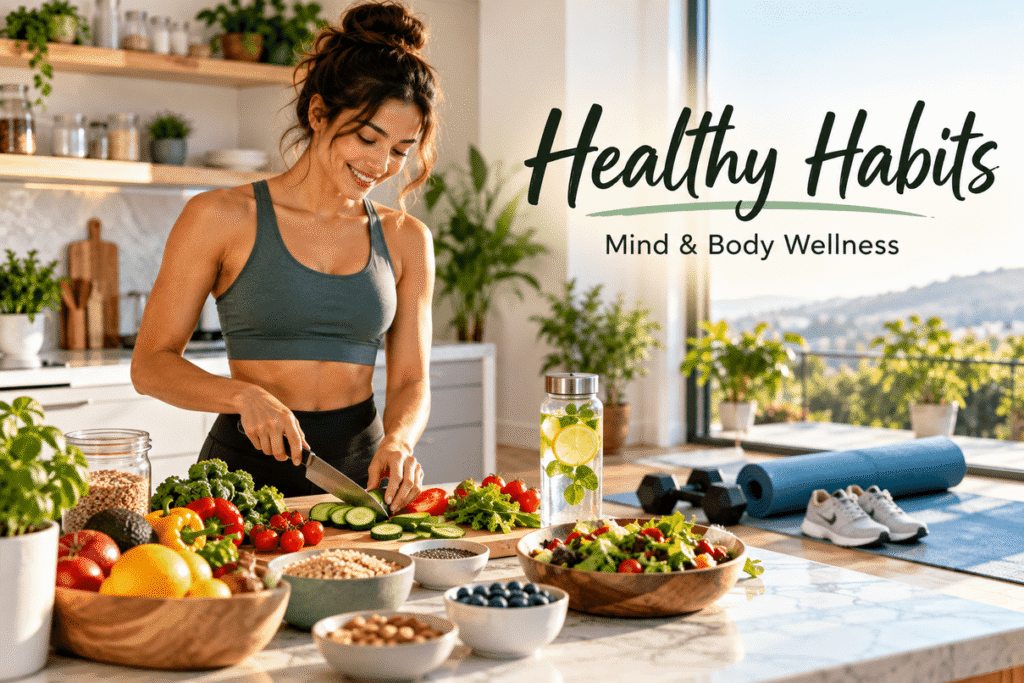
Food is another foundation of total wellness.
Healthy nutrition becomes easier to maintain when it is part of a balanced life rather than a temporary diet. The goal is to create eating habits that give you energy while still allowing flexibility and enjoyment.
A healthy lifestyle does not require following every nutrition trend that appears online.
It starts with simple, consistent choices.
Build meals around a variety of nutritious foods.
Include vegetables and fruits.
Choose whole grains and other minimally processed foods regularly.
Include appropriate sources of protein.
Drink enough fluids.
Pay attention to highly processed foods, excess added sugars, salt, and unhealthy fats.
WHO emphasizes variety, balance, moderation, and adequacy as principles of healthy diets. (WHO)
But nutrition should also be practical.
A perfect meal plan that you cannot follow is not particularly useful.
Instead, build a system that fits your real life.
Keep healthy foods convenient.
Prepare a few ingredients in advance.
Learn simple recipes.
Carry nutritious snacks when you know you will be away from home.
Plan meals around your schedule.
Give yourself flexibility for social events and celebrations.
Avoid turning nutrition into an all-or-nothing mindset.
One restaurant meal does not destroy your progress.
One healthy meal does not transform your entire lifestyle.
Your overall pattern matters more than one individual choice.
7. Habit #4: Prioritize Sleep and Recovery
You cannot build sustainable wellness without recovery.
Sleep gives your body and mind an opportunity to recover from the demands of the day.
CDC guidance recommends that adults generally get at least seven hours of sleep per night, although individual needs can vary. Good sleep habits include keeping a consistent sleep schedule, creating a comfortable environment, and turning off electronic devices before bedtime. (CDC)
Sleep should not be treated as an optional activity that happens only after everything else is finished.
If you consistently sacrifice sleep to create more time for work, entertainment, or scrolling, you may eventually pay for that lost recovery.
Create a simple evening routine.
Start winding down before bedtime.
Reduce stimulating activities.
Keep your sleep environment comfortable.
Try to maintain a relatively consistent schedule.
Give yourself enough time in bed.
Recovery also extends beyond sleep.
Your body may need recovery after demanding physical activity.
Your mind may need quiet time after intense work.
Your emotions may need space after a difficult experience.
Sometimes the most productive decision is to pause.
Balance requires effort, but it also requires restoration.
8. Habit #5: Strengthen Your Mental Fitness
Your brain is constantly processing information.
Emails.
Messages.
Deadlines.
News.
Conversations.
Financial decisions.
Social media.
Responsibilities.
Expectations.
Without intentional breaks, mental overload can become part of everyday life.
Mental fitness involves developing habits that support awareness, focus, learning, resilience, and healthier thinking patterns.
One simple practice is to create periods of uninterrupted attention.
Choose one task.
Remove unnecessary distractions.
Work on it for a defined period.
Then take a break.
Another useful habit is reflection.
At the end of the day, ask yourself:
What went well?
What was difficult?
What did I learn?
What could I handle differently tomorrow?
This turns everyday experiences into opportunities for growth.
Mindfulness can also help you become more aware of your thoughts and surroundings.
Reading can stimulate learning.
Journaling can help organize thoughts.
Spending time in nature can create a break from constant digital stimulation.
Learning new skills can challenge your brain.
Mental fitness is not about being positive all the time.
It is about developing a healthier relationship with your thoughts and challenges.
You can acknowledge that something is difficult without deciding that it is impossible.
You can make mistakes without defining yourself by them.
You can experience uncertainty without assuming the worst.
That kind of mental flexibility can become an important part of a balanced lifestyle.
9. Habit #6: Develop Emotional Wellness
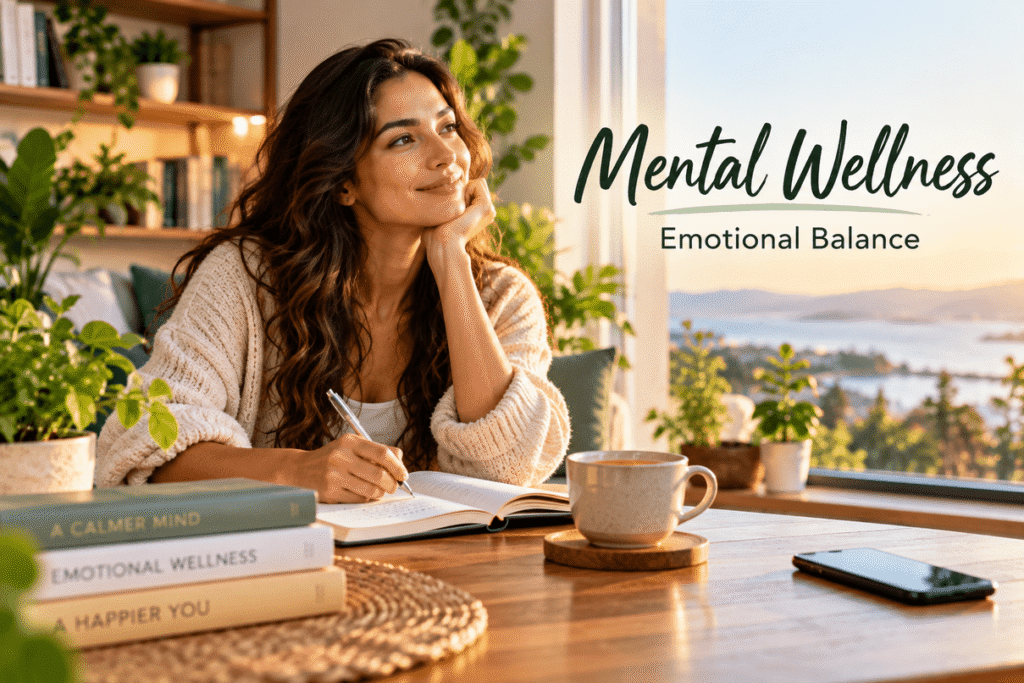
Emotional wellness deserves the same attention as physical wellness.
Emotional awareness can make a balanced life more sustainable because it helps you recognize when you need rest, support, connection, or a change in direction.
Yet many people spend years learning how to train their bodies while never learning how to understand their emotions.
Emotional wellness begins with awareness.
What are you feeling?
Why might you be feeling it?
What happened before the emotion appeared?
What do you need?
Sometimes the answer is rest.
Sometimes it is a conversation.
Sometimes it is a boundary.
Sometimes it is action.
Sometimes it is simply time.
The goal is not to eliminate difficult emotions.
Difficult emotions are part of being human.
Instead, develop healthier ways to recognize and respond to them.
You can practice naming emotions more precisely.
Instead of “I feel bad,” try:
“I feel disappointed.”
“I feel overwhelmed.”
“I feel frustrated.”
“I feel nervous.”
“I feel lonely.”
Specific language can help you understand what is happening.
Relationships also play a role.
Having people you trust can provide opportunities to talk, listen, share experiences, and receive support.
If emotional difficulties become persistent, severe, or interfere with daily life, professional support can be an important part of wellness.
Asking for help is not a weakness.
It can be a practical step toward better health.
10. Habit #7: Improve Your Financial Fitness
Financial wellness is often left out of traditional conversations about fitness.
But money is connected to everyday life.
Your financial habits can influence your choices, priorities, stress, relationships, and future plans.
Financial fitness begins with awareness.
Know what you earn.
Know what you spend.
Understand your recurring expenses.
Set realistic goals.
Build saving habits when possible.
Review debt.
Plan for upcoming expenses.
Think carefully about purchases.
You do not need to become a financial expert to become more financially aware.
Start with a weekly money check-in.
Set aside 15–20 minutes.
Review recent spending.
Look at upcoming bills.
Check your savings progress.
Identify one unnecessary expense.
Then make one practical decision.
Over time, these small actions can create greater awareness.
Financial wellness is not about chasing wealth simply for the sake of having more.
It is about building a healthier relationship with money and using your resources intentionally.
Your financial goals should support the life you want to build.
11. Habit #8: Build Meaningful Relationships
A balanced life needs connection.
Humans are social beings, and meaningful relationships can contribute to wellbeing.
CDC notes that social connection can support health and wellbeing and can encourage healthy behaviors. (CDC)
This is one reason community can be such a powerful part of a wellness journey.
Think beyond networking.
Think connection.
Who encourages you?
Who listens to you?
Who challenges you in a positive way?
Who celebrates your progress?
Who can you support?
You do not need a massive social network.
Quality matters.
A weekly conversation with a close friend can be more meaningful than hundreds of online interactions.
You can strengthen relationships through simple actions.
Invite someone for a walk.
Share a healthy meal.
Join a recreational activity.
Attend a community event.
Check in with someone you have not spoken to recently.
Create a shared goal.
Find people who are working toward similar improvements.
When healthy habits become social experiences, they can become more enjoyable and easier to maintain.
This is especially relevant to fitness.
Walking with a friend can turn exercise into connection.
Joining a group class can create accountability.
Participating in a community challenge can add motivation.
Wellness does not have to be a solo project.
12. Habit #9: Create Healthy Digital Boundaries
Technology is useful.
But constant access does not automatically create a healthier lifestyle.
Your phone can help you exercise, communicate, learn, work, organize, and stay connected.
It can also consume hours without you realizing it.
Digital wellness starts with intentionality.
Create boundaries around your devices.
You might establish a phone-free morning period.
Keep your phone away during meals.
Turn off nonessential notifications.
Set limits around social media.
Create a screen-free period before bed.
Take regular breaks from your computer during long work sessions.
Most importantly, pay attention to how digital content affects you.
Does it inspire you?
Teach you?
Connect you?
Or does it consistently leave you distracted, anxious, inadequate, or exhausted?
Your digital environment can influence your attention and mood.
Curate it intentionally.
Follow educational accounts.
Choose positive communities.
Unfollow content that consistently undermines your wellbeing.
Use technology as a tool rather than allowing it to become the default activity for every empty moment.
Digital boundaries create space.
That space can be used for movement, reading, conversations, hobbies, reflection, and rest.
13. Habit #10: Make Personal Growth a Daily Habit
Personal growth is not something you complete.
There is no final version of yourself.
Your goals change.
Your responsibilities change.
Your interests change.
Your circumstances change.
That means learning should remain part of your lifestyle.
Read.
Listen.
Practice.
Reflect.
Ask questions.
Learn from mistakes.
Try something new.
Develop useful skills.
Improve your communication.
Learn more about health.
Learn about finances.
Explore new interests.
The most effective personal growth is often small.
Ten pages of reading.
Fifteen minutes of learning.
A short reflection.
One uncomfortable conversation.
One new skill.
One improved habit.
These actions compound.
Personal development also becomes more meaningful when it connects to your values.
Do not simply ask:
“What should I improve?”
Ask:
“What kind of person do I want to become?”
That question changes the direction of growth.
Maybe you want to become healthier.
More patient.
More disciplined.
More financially responsible.
More confident.
More connected.
More resilient.
Your habits should support that identity.
14. How to Balance These Habits Without Feeling Overwhelmed
Ten habits can sound like ten more responsibilities.
That is not the goal.
The goal is to create a simpler system.
Start by choosing your top three priorities.
For example:
Priority 1: Physical wellness
Walk every day and exercise three times per week.
Priority 2: Mental wellness
Spend 10 minutes reading or journaling each evening.
Priority 3: Financial wellness
Review spending every Sunday.
Once those habits become familiar, introduce another.
This gradual approach can make lifestyle change feel less overwhelming.
You should also avoid comparing your routine to somebody else’s.
Your life is unique.
You may have a demanding career.
You may have children.
You may be studying.
You may have caregiving responsibilities.
You may be recovering from an injury.
You may have limited time or resources.
A balanced lifestyle should fit your reality.
Instead of copying someone else’s routine, build your own.
Ask:
What is realistic for me?
What gives me the greatest benefit?
What can I consistently repeat?
Those questions are more useful than chasing someone else’s definition of wellness.
15. Build a Simple Weekly Wellness Routine
One of the easiest ways to turn wellness into action is to create a weekly routine.
At the beginning of the week, spend 15 minutes planning.
Look at your schedule.
Then decide when you will move.
Decide when you will prepare or plan meals.
Choose a few recovery periods.
Schedule important social connections.
Review your finances.
Set one personal development goal.
Create a digital boundary.
Then leave room for life.
Do not fill every minute.
A useful weekly wellness system could look like this:
Monday: Strength training + weekly priorities.
Tuesday: Walking + focused learning.
Wednesday: Mobility + social connection.
Thursday: Strength training + financial review.
Friday: Outdoor activity + meaningful conversation.
Saturday: Recreational movement + personal growth.
Sunday: Recovery + reflection + weekly planning.
This is only an example.
Your schedule should reflect your life.
The important idea is integration.
You are not creating separate lives for fitness, work, finances, relationships, and personal growth.
You are creating one lifestyle that supports all of them.
16. The Connection Between the 4 Dimensions of Fitness
KearnFit’s philosophy is built around four dimensions of fitness:
Mental Fitness
Building awareness, focus, resilience, learning, and healthy thought patterns.
Physical Fitness
Supporting movement, strength, nutrition, sleep, mobility, and recovery.
Emotional Fitness
Understanding emotions, developing self-awareness, communicating effectively, and building healthy coping strategies.
Financial Fitness
Developing awareness around spending, saving, planning, goals, and financial decision-making.
These dimensions are different, but they are not isolated.
Consider how they interact.
Financial stress may affect your mental wellbeing.
Poor sleep may affect your physical performance and emotional state.
Strong relationships may encourage healthier behaviors.
Regular exercise may become a social activity.
Personal growth may improve your confidence in multiple areas.
This is why a holistic approach can be useful.
Instead of asking:
“How can I become fitter?”
Ask:
“How can I become stronger across my life?”
That is a much bigger question.
And it can lead to more meaningful goals.
17. 5 Common Habits That Disrupt Life Balance
Even when you understand wellness, certain behaviors can gradually create imbalance.
Mistake #1: Trying to Be Perfect
Perfection is not required for progress.
Missing a workout does not erase your fitness.
Having a difficult day does not erase your emotional growth.
Spending more than planned once does not destroy your financial goals.
Return to your routine.
Mistake #2: Saying Yes to Everything
Your time and energy are limited.
If every request receives a yes, your own priorities may disappear.
Learn to protect important commitments.
Healthy boundaries are part of balance.
Mistake #3: Neglecting Recovery
Constant activity is not the same as productivity.
Your body and mind need recovery.
Schedule it.
Mistake #4: Comparing Your Journey
Social media can make other people’s lifestyles look effortless.
Remember that you are seeing selected moments rather than someone’s complete reality.
Focus on your own progress.
Mistake #5: Focusing on Only One Dimension
Being physically fit is valuable.
But physical fitness alone does not represent total wellness.
Look at the bigger picture.
18. Your 30-Day Balanced Life Challenge
Ready to put these ideas into practice?
Try a 30-day challenge.
Creating a balanced life does not happen through one perfect routine. It develops through small actions that you can repeat consistently, even when your schedule becomes busy.
The goal is not perfection.
The goal is awareness and consistency.
For the next 30 days, choose one small action from each area.
Mental Wellness: Spend 10 minutes reading, journaling, reflecting, or practicing mindfulness.
Physical Wellness: Move your body every day.
Nutrition: Make one intentional nutritious choice each day.
Sleep: Protect your bedtime routine.
Emotional Wellness: Check in with your emotions.
Financial Wellness: Track spending and complete one weekly financial review.
Relationships: Intentionally connect with someone.
Digital Wellness: Create one screen-free period each day.
Personal Growth: Learn something useful.
Community: Participate in a group, activity, or conversation that supports your growth.
At the end of each week, ask:
What felt easy?
What felt difficult?
What gave me energy?
What drained me?
What should I continue?
What should I change?
This turns the challenge into an experiment.
You are learning what works for your lifestyle.
19. How KearnFit Supports Total Wellness

Creating a balanced life becomes more powerful when you do not have to figure everything out alone.
KearnFit is built around a broader understanding of fitness and wellbeing.
The four dimensions—mental, physical, emotional, and financial—provide a framework for thinking about the complete person.
But wellness is not only about information.
It is also about action.
And action becomes easier when you have motivation, accountability, useful resources, and a supportive community.
KearnFit aims to bring those elements together.
Whether your current focus is improving your physical fitness, strengthening your mindset, becoming more emotionally aware, developing healthier financial habits, or simply creating a more balanced lifestyle, your journey can begin with one practical step.
You can explore KearnFit and discover more wellness resources at www.kearnfit.com.
The objective is not to become perfect.
It is to become stronger, healthier, more aware, and more intentional over time.
20. Conclusion: Create Your Balanced Life One Habit at a Time
Building a balanced life does not require a complete lifestyle transformation overnight.
The beauty of a balanced life is that you can continue adjusting it as your priorities, responsibilities, and goals change.
It starts with small decisions.
Wake up with intention.
Move your body.
Eat nourishing food.
Protect your sleep.
Strengthen your mind.
Understand your emotions.
Manage your money.
Build meaningful relationships.
Create healthier digital boundaries.
Keep learning.
These habits may look simple.
But simple does not mean insignificant.
Repeated actions shape routines.
Routines shape lifestyles.
And lifestyles shape the direction of your life.
You will not have a perfect week every week.
There will be busy periods.
There will be setbacks.
There will be unexpected responsibilities.
There will be days when your routine falls apart.
That is part of being human.
Balance is not the ability to avoid disruption.
Balance is the ability to return.
Return to movement.
Return to healthy meals.
Return to sleep.
Return to reflection.
Return to your relationships.
Return to your financial goals.
Return to the habits that help you feel like yourself.
Most importantly, remember that wellness is multidimensional.
Your body matters.
Your mind matters.
Your emotions matter.
Your financial wellbeing matters.
Your relationships matter.
Your growth matters.
When you give each area thoughtful attention, you can begin creating a lifestyle that is not only healthier but also more sustainable.
That is the KearnFit approach.
Fitness is bigger than the gym. Wellness is bigger than a single habit. And your potential is bigger than where you are today.
Start with one habit.
Make it consistent.
Then build another.
As you continue your journey, remember that a balanced life will look different for everyone. Focus on progress, consistency, and habits that genuinely support the lifestyle you want to create.
Build your balance. Strengthen your life. Grow with KearnFit.
Visit www.kearnfit.com and become part of a community focused on building a stronger, healthier, more balanced future.