1. Discover What Modern Wellness Really Means

What if getting healthier did not mean completely changing your life?
What if wellness was not about following a perfect diet, waking up at 5 a.m., spending hours in the gym, or trying to eliminate every source of stress?
What if it was simply about learning how to take better care of yourself while living the life you already have?
That is the idea behind Modern Wellness.
Modern Wellness is not about following every new health trend; it is about creating practical habits that support your mind, body, emotions, and everyday life.
Life today is faster, more connected, and often more demanding than ever. We work through screens, communicate through notifications, spend long periods sitting, manage busy schedules, and constantly move between personal and professional responsibilities. At the same time, we are surrounded by an enormous amount of health information.
One person tells you to exercise every morning. Another recommends meditation. Someone else promotes a particular diet, supplement, productivity system, or morning routine.
With so much information available, wellness can start to feel complicated.
But it does not have to be.
A practical approach to wellbeing begins by looking at the whole person. Your physical health matters, but so do your mental state, emotional wellbeing, relationships, habits, environment, and financial life.
The World Health Organization describes self-care as actions and habits that help individuals, families, and communities promote and maintain health, including healthy eating, physical activity, sleep, and connection with others.
KearnFit takes this broader idea a step further by looking at wellness through four connected dimensions: mental, physical, emotional, and financial fitness.
The goal is not perfection.
The goal is progress.
2. Understand Why Modern Wellness Needs a Different Approach
Traditional ideas of fitness often focus heavily on physical appearance.
How much do you weigh?
How much can you lift?
How fast can you run?
How many calories did you burn?
Those measurements can have their place, but they do not tell the entire story.
Imagine someone who exercises regularly but rarely sleeps enough. Or someone who eats nutritious meals but constantly feels overwhelmed by work. Consider someone who is physically active but disconnected from friends and family.
Can one area of health compensate completely for another?
Probably not.
This is why a modern approach to wellbeing needs to look beyond the gym.
Our environment has changed. Many people spend substantial portions of their working day using computers and smartphones. Transportation can reduce everyday movement. Digital entertainment can make it easy to spend hours sitting. Work can follow us home through email and messaging apps.
At the same time, technology gives us extraordinary opportunities to learn, connect, track activity, access information, and build supportive communities.
The answer is not to reject modern life.
It is to learn how to use it intentionally.
Physical activity, for example, does not only mean structured exercise. WHO defines physical activity broadly as bodily movement, including walking, cycling, recreation, sports, work, and household activities.
That means a healthier lifestyle can be built into ordinary life.
A walk between meetings.
Taking the stairs.
Playing with your children.
Cycling to a nearby destination.
Stretching after sitting for a long period.
Going outside instead of spending another hour on a screen.
These small decisions can become part of a much bigger lifestyle.
3. Explore the Four Dimensions Behind Modern Wellness
KearnFit is built around the belief that fitness is bigger than physical exercise.
The first dimension is mental fitness. This includes focus, learning, awareness, stress management, and developing healthier ways to respond to everyday challenges.
The second is physical fitness. This includes movement, strength, mobility, endurance, recovery, and taking care of your body.
The third is emotional fitness. This means understanding your emotions, communicating effectively, developing resilience, and building healthier relationships.
The fourth is financial fitness. Money can influence stress, choices, relationships, and future planning, so developing greater financial awareness is another important part of a balanced life.
These dimensions are connected.
A stressful financial situation can affect your mental and emotional wellbeing. Poor sleep can affect energy and concentration. Regular movement can support physical health while also creating opportunities to spend time outdoors or connect with other people.
This interconnected approach is what makes holistic wellness so valuable.
You are not four separate people.
You are one person experiencing all four dimensions at the same time.
Holistic wellness works best when these four dimensions are viewed as connected parts of the same lifestyle rather than separate goals.
4. Build Modern Wellness Through a Stronger Mind

Your mind is involved in almost everything you do.
It helps you make decisions, solve problems, communicate, learn, work, and respond to challenges.
Mental wellbeing does not mean feeling positive every minute of every day. Stress, disappointment, uncertainty, and frustration are normal parts of life.
WHO describes mental health as a state of mental wellbeing that helps people cope with life’s stresses, develop their abilities, learn, work, and contribute to their communities.
One practical way to support your mind is to create moments where you are not constantly consuming information.
Consider what happens during a typical day.
You wake up and check your phone.
You read messages.
You open social media.
You check email.
You start work.
Notifications continue throughout the day.
Then, after work, you consume more content until you eventually fall asleep.
Your mind rarely receives a genuine pause.
Try creating small periods of intentional quiet.
Spend five minutes sitting without your phone.
Take a walk without listening to anything.
Write down your thoughts.
Read something that genuinely interests you.
Practise slow breathing.
Have a conversation without checking notifications.
These are not complicated techniques. They are opportunities to create mental space.
You can also develop your mind through learning. Read a book, learn a new skill, explore a subject, or challenge yourself to understand a perspective different from your own.
Mental fitness is not about having a perfectly calm mind.
It is about becoming more aware of how your mind works and creating habits that support clarity and resilience.
5. Make Movement an Essential Part of Modern Wellness
You do not need to become a professional athlete to become more active.
One of the most useful shifts in modern fitness is recognising that movement can happen throughout the day.
A workout is one form of movement.
Walking to a shop is movement.
Gardening is movement.
Dancing is movement.
Cycling is movement.
Playing a sport is movement.
Household activities can also involve physical activity.
WHO recommends adults aim for at least 150 minutes of moderate-intensity aerobic activity each week, or an equivalent amount of vigorous activity, alongside muscle-strengthening activities on two or more days. However, people should adapt activity to their individual circumstances, abilities, and health needs.
If you are currently inactive, you do not have to begin by trying to reach the full recommendation immediately.
Start where you are.
A ten-minute walk can be a beginning.
A short mobility routine can be a beginning.
Two strength sessions each week can be a beginning.
The most important question is not, “What is the hardest workout I can survive?”
Ask instead:
“What type of movement can I realistically continue?”
Enjoyment matters.
If you hate an activity, maintaining it for months can become difficult. Experiment with different options until you discover movement that fits your personality and lifestyle.
Physical activity also has benefits beyond physical fitness. WHO notes that regular activity can support mental health, sleep, brain health, and overall wellbeing.
That is why movement belongs at the centre of a balanced lifestyle.
6. Create Modern Wellness Through Better Nutrition
Food is not simply fuel.
It is part of culture, family, celebration, social connection, and everyday life.
That is why healthy eating should not be reduced to a rigid list of “good” and “bad” foods.
A sustainable approach focuses on overall dietary patterns.
WHO identifies adequacy, balance, moderation, and diversity as core principles of healthy diets. It also highlights foods such as vegetables, fruits, whole grains, pulses, and other nutritious foods as important components of healthy eating.
For many people, improving nutrition can begin with simple decisions.
Add more variety to your meals.
Include vegetables or fruit more often.
Choose whole grains where practical.
Include suitable protein sources.
Pay attention to highly processed foods that may be high in salt, free sugars, or unhealthy fats.
Drink water regularly according to your needs.
Learn basic cooking skills.
Plan meals when your schedule allows.
Most importantly, avoid turning nutrition into an all-or-nothing challenge.
One restaurant meal does not undo your healthy habits.
One dessert does not define your diet.
One busy day does not mean you have failed.
Your overall pattern matters.
Your nutritional needs can also vary based on age, activity, culture, health conditions, and other factors. If you have a medical condition or specific dietary requirements, personalised guidance from a qualified healthcare or nutrition professional may be appropriate.
A healthy lifestyle should give you energy and flexibility rather than making food a constant source of stress.
7. Protect Sleep and Recovery With Modern Wellness Habits
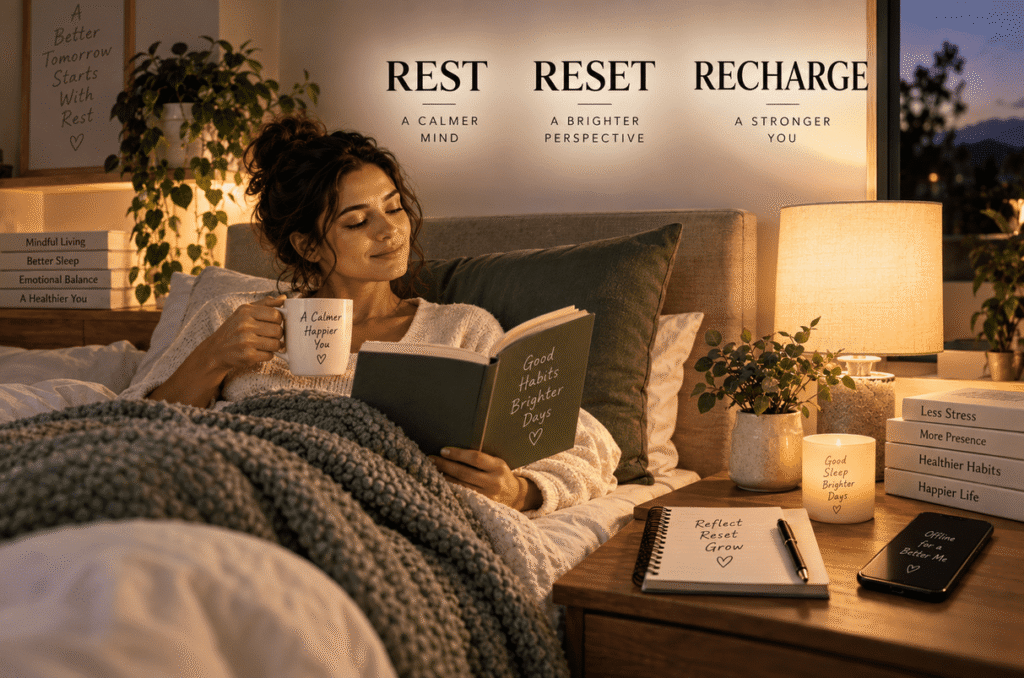
There is a simple question that many people forget to ask when they want to improve their health:
Am I actually giving my body enough time to recover?
People often focus on exercise and nutrition while treating sleep as optional.
But sleep is not wasted time.
It is part of taking care of yourself.
The CDC notes that most adults need at least seven hours of sleep each night, although sleep needs vary by age and individual circumstances. Good sleep is important for health and emotional wellbeing.
A healthy sleep routine does not have to involve an expensive mattress, complicated supplements, or an elaborate evening ritual.
Start with consistency.
Try to maintain reasonably regular sleep and wake times.
Create a bedroom environment that is comfortable and conducive to sleep.
Reduce unnecessary distractions.
Give yourself time to wind down.
Consider reducing bright artificial light and stimulating activities before bedtime.
Morning light and daytime physical activity can also support a healthy sleep routine.
Recovery also applies to exercise.
More is not always better.
Your body needs time to adapt to physical activity. If you constantly train without adequate recovery, your routine may become difficult to maintain.
Think of recovery as part of your fitness plan rather than the opposite of fitness.
Rest can help you return to activity with greater energy.
8. Strengthen Emotional Wellness Through Awareness
Your emotional life deserves attention just as much as your physical health.
Emotional fitness does not mean controlling every feeling.
It means developing the awareness to recognise what you are experiencing and choosing healthier responses where possible.
Consider a difficult day at work.
You receive criticism.
You feel frustrated.
You go home and someone asks how your day was.
You respond sharply.
Later, you regret it.
Emotional awareness can create a pause between the experience and the reaction.
You might notice:
“I am frustrated.”
“I am tired.”
“I need some time before I have this conversation.”
That simple awareness can change what happens next.
Journaling can be useful for some people.
So can talking with a trusted friend.
For others, physical activity, creative work, meditation, time outdoors, or professional support may be helpful.
There is no single emotional wellness routine that works for everyone.
The important thing is learning to recognise your internal experience rather than automatically ignoring it.
If you experience persistent emotional distress, significant changes in mood, or symptoms that interfere with everyday life, seek support from an appropriately qualified mental health professional.
9. Make Community a Powerful Part of Modern Wellness

One of the biggest mistakes in modern health culture is believing that everything must be done alone.
You do not have to build every healthy habit by yourself.
People influence one another.
A supportive friend can encourage you to go for a walk.
A workout partner can help you stay accountable.
A community can introduce you to new ideas.
A mentor can help you learn.
A group can make healthy activities more enjoyable.
Connection can also give wellness a sense of purpose.
Imagine joining a community where people are not simply competing over appearance or performance but are learning how to improve different parts of their lives.
That is the kind of environment KearnFit aims to build.
A community centred on mental, physical, emotional, and financial fitness can encourage people to look beyond quick fixes and focus on sustainable growth.
WHO also includes connecting with others among healthy self-care and lifestyle practices.
Community does not mean you have to know everyone.
It means knowing that you are part of something.
Sometimes one conversation can change your perspective.
Sometimes one person can motivate you to start.
Sometimes your own progress can inspire someone else.
Wellness becomes more powerful when growth becomes something we can share.
10. Use Technology Intentionally in Modern Wellness
Technology is neither automatically good nor automatically bad.
It depends on how you use it.
Your smartphone can distract you for hours, but it can also remind you to move, help you track habits, provide educational resources, connect you with supportive communities, and make information easier to access.
The goal is intentional use.
Ask yourself:
Does this technology help me?
Does it support my goals?
Is it helping me connect or making me constantly distracted?
Am I using it because I genuinely want to, or because I automatically reach for it?
Small boundaries can make a difference.
Turn off unnecessary notifications.
Create periods without your phone.
Keep screens away during important conversations.
Avoid endless scrolling when you are tired.
Use fitness and wellness apps as tools rather than as sources of pressure.
The best technology is technology that serves your life rather than controlling your attention.
11. Build Financial Fitness Into Modern Wellness
Money is another part of life that can influence wellbeing.
Financial fitness does not mean becoming wealthy or comparing your financial situation with someone else’s.
It begins with awareness.
Do you understand your regular expenses?
Do you know what you are spending?
Are you setting financial goals?
Do you have a plan for unexpected expenses?
Are you learning about financial decisions that affect your future?
These questions can help you become more intentional.
Financial stress can also affect other areas of life. Worrying about money can make it harder to focus, relax, or plan for the future.
That is why KearnFit includes financial fitness as one of its four dimensions.
Start with simple actions.
Review recurring expenses.
Create a basic budget.
Set realistic savings goals.
Learn about financial planning.
Avoid impulsive decisions driven by social media or unrealistic promises.
For complex financial decisions involving investments, taxes, insurance, or significant debt, consider speaking with an appropriately qualified financial professional.
Financial fitness is about building awareness and confidence over time.
12. Create Your Personal Modern Wellness Routine
There is no universal routine that everyone should follow.
Your routine needs to fit your life.
A student will have different responsibilities from a working professional.
A parent may have different time constraints from someone living alone.
Someone beginning their fitness journey will have different needs from an experienced athlete.
That is why your routine should be personalised.
Start by asking four questions.
How can I support my mind?
Maybe you need more quiet time, learning, reflection, or better boundaries around digital distractions.
How can I support my body?
Maybe you need more movement, better sleep, improved nutrition, or more recovery.
How can I support my emotional wellbeing?
Maybe you need stronger boundaries, meaningful conversations, journaling, or professional support.
How can I support my financial wellbeing?
Maybe you need a clearer budget, better spending awareness, or more financial education.
You do not need to solve all four areas at once.
Choose one small action from each.
For example:
| Dimension | Simple Starting Action |
|---|---|
| Mental | 10 minutes without digital distractions |
| Physical | A daily walk |
| Emotional | Journal for five minutes |
| Financial | Review weekly spending |
This creates a manageable starting point.
As those actions become easier, you can gradually develop your routine.
13. Avoid These Common Modern Wellness Mistakes
The wellness industry can sometimes make healthy living appear much more complicated than it needs to be.
One common mistake is trying everything at once.
You start a new diet, new workout, meditation routine, supplement plan, sleep schedule, and productivity system simultaneously.
Two weeks later, you are exhausted.
Instead, change one or two things at a time.
Another mistake is chasing perfection.
Missing a workout does not mean you failed.
Eating a meal that does not fit your usual pattern does not erase your progress.
Going to bed late once does not destroy your sleep routine.
Progress is rarely linear.
A third mistake is comparing yourself with other people.
Social media often shows carefully selected moments rather than the complete reality of someone’s life.
Your wellness journey should be based on your circumstances, goals, health needs, and values.
Another mistake is believing every wellness claim you see online.
Health information should come from reliable sources. Be especially careful with claims promising instant cures, dramatic transformations, or guaranteed results.
A final mistake is forgetting professional care.
Lifestyle habits can support health, but they do not replace appropriate medical or mental healthcare.
Self-care and professional care can work together.
14. Try This Simple 7-Day Modern Wellness Reset
You do not need to wait for Monday, next month, or the beginning of a new year.
You can start today.
Here is a simple seven-day reset designed to help you become more intentional.
Day 1: Move
Take a walk or complete another form of comfortable physical activity.
Day 2: Unplug
Create 30 minutes without unnecessary digital distractions.
Day 3: Nourish
Prepare one balanced meal using a variety of nutritious foods.
Day 4: Rest
Prioritise your bedtime and create a calmer evening routine.
Day 5: Connect
Call a friend, spend time with family, or participate in a supportive community.
Day 6: Reflect
Write down three things that are going well and one area you would like to improve.
Day 7: Plan
Choose three habits you want to continue during the following week.
The purpose of this reset is not to transform your entire life in seven days.
It is to help you discover what feels realistic.
Once you find habits that fit your lifestyle, consistency becomes easier.
The goal of a sustainable wellness lifestyle is not perfection; it is creating small, repeatable choices that make everyday life healthier and more balanced.
15. Make Modern Wellness a Lifestyle, Not a Trend
Wellness trends come and go.
One year, everyone may be talking about a particular diet.
The next year, it may be a new workout.
Then a new productivity method appears.
There is nothing wrong with learning about new ideas, but your wellbeing should not depend on constantly chasing the next trend.
The strongest habits are often simple.
Move regularly.
Eat a varied and balanced diet.
Sleep enough.
Make time for recovery.
Pay attention to your emotional wellbeing.
Stay connected.
Learn continuously.
Develop financial awareness.
Use technology intentionally.
And give yourself permission to be human.
A healthy lifestyle is not built through one perfect day.
It is built through hundreds of ordinary decisions.
Some days will be excellent.
Some days will be difficult.
Some weeks will feel productive.
Others will feel chaotic.
The goal is not to control everything.
The goal is to keep returning to the habits that support you.
16. Start Your Modern Wellness Journey With KearnFit
Your health is not a single goal.
It is a journey.
And that journey can include your mind, your body, your emotions, your relationships, and your financial wellbeing.
At KearnFit, we believe fitness should fit real life.
That means moving beyond the idea that fitness is only about workouts or appearance.
Our four dimensions—mental, physical, emotional, and financial fitness—create a broader framework for thinking about personal growth.
You do not need to become a completely different person.
You simply need to start paying attention to the person you are becoming.
Maybe your first step is a walk.
Maybe it is better sleep.
Maybe it is putting your phone away for an hour.
Maybe it is having an honest conversation.
Maybe it is learning something new.
Maybe it is finally taking control of a financial habit you have been avoiding.
Whatever your first step looks like, make it realistic.
Make it meaningful.
And make it something you can continue.
Because the most powerful transformation is rarely the one that happens overnight.
It is the one that becomes part of your life.
With the right approach, Modern Wellness can become a sustainable lifestyle built around balance, consistency, connection, and personal growth.
Join the KearnFit Community
KearnFit is building a community around a simple idea: a healthier life is about more than one dimension of fitness.
Follow KearnFit, explore our wellness resources, connect with a growing community, and continue discovering practical ways to strengthen your mind, body, emotions, and financial wellbeing.
Visit www.kearnfit.com and take your next step with KearnFit.
KearnFit — Four Dimensions. One Better You.