1. Why Physical Fitness Should Go Beyond the Gym
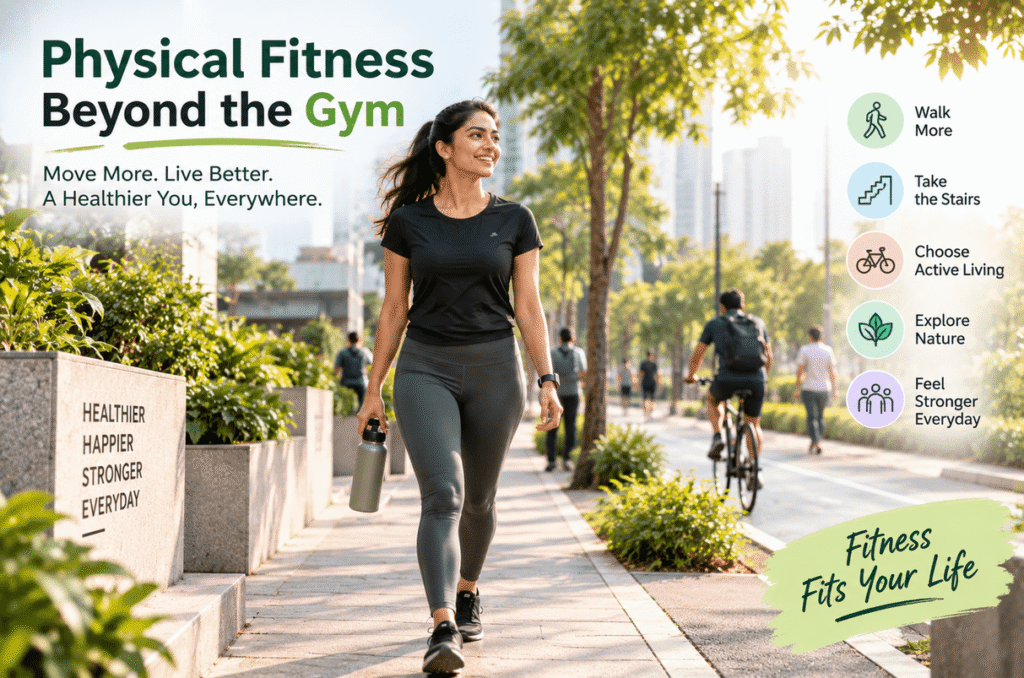
What if you could become fitter without spending every evening in a gym?
Imagine walking to the market instead of driving. Taking the stairs instead of the lift. Playing a sport with friends on the weekend. Stretching after a long day at work. Taking a short walk between meetings. Gardening, dancing, cycling, swimming, hiking, or simply spending more time on your feet.
None of these activities may look like a traditional workout.
But they are movement.
And movement matters.
For many people, the word physical fitness immediately creates an image of treadmills, dumbbells, bodybuilding, intense workouts, and crowded gyms. The gym can certainly be a valuable place to exercise, but it is not the only place where you can build a healthier and more active lifestyle.
The World Health Organization recognises physical activity across many parts of everyday life, including transportation, work, household activities, recreation, sport, walking, and cycling. Its guidance also emphasises that some activity is better than none.
That idea changes the conversation.
Instead of asking, “Did I make it to the gym today?” you can begin asking, “How much movement did I include in my day?”
That is a much more flexible question.
Modern lifestyles can make movement surprisingly difficult. Many people spend hours sitting at desks, commuting, attending meetings, studying, watching television, or using digital devices. When the majority of the day is spent sitting, a one-hour workout may not completely define your overall activity pattern.
This does not mean you need to exercise constantly.
It means there are opportunities to move throughout the day.
At KearnFit, we believe fitness should support your life rather than make your life feel like a fitness programme. Your goal can be to become stronger, more mobile, more energetic, and more confident while enjoying the activities that make your everyday life meaningful.
The gym is one option.
Your entire life can become an opportunity for movement.
2. What Physical Fitness Really Means
Physical fitness is not simply about appearance.
It can involve your ability to move comfortably, perform everyday activities, build strength, maintain endurance, develop mobility, recover from activity, and participate in the things you enjoy.
Think about your daily life.
Can you comfortably carry your shopping?
Can you walk for a reasonable distance without feeling excessively tired?
Can you climb stairs?
Can you play with your children?
Can you travel and explore new places?
Can you bend, reach, lift, push, pull, walk, and move with confidence?
These everyday abilities matter.
Exercise can help support many aspects of health. The Centers for Disease Control and Prevention notes that regular physical activity can provide immediate and long-term benefits, including improved sleep, reduced anxiety, stronger bones and muscles, better balance and coordination, and lower risks associated with several chronic conditions.
The important point is that fitness does not have to look the same for everyone.
A professional athlete may train for performance.
A busy professional may want more energy for everyday life.
A parent may want to keep up with their children.
A beginner may simply want to feel more comfortable walking and moving.
An older adult may prioritise strength, balance, and independence.
Your goals can be different, and your approach should reflect your circumstances.
That is why building an active lifestyle can be more sustainable than constantly chasing an ideal body or following extreme fitness trends.
3. Physical Fitness Habit #1: Make Walking a Daily Superpower
Walking is one of the simplest ways to add more movement to your day.
You do not need specialised equipment. You can walk alone, with friends, while listening to music, during a phone call, or while exploring your neighbourhood.
Try identifying opportunities where walking naturally fits into your routine.
Could you walk to a nearby shop?
Could you take a short walk after lunch?
Could you park slightly farther away when appropriate?
Could you take a 10-minute walking break during your workday?
Small opportunities can add up.
The CDC notes that adults who sit less and engage in any amount of moderate- or vigorous-intensity physical activity can gain health benefits.
Walking also gives you an opportunity to step away from screens and change your environment.
Instead of treating walking as something you do only when you have time for exercise, make it part of your normal lifestyle.
You do not have to start with a specific step target.
Start with consistency.
If you currently do very little activity, a short daily walk may be a more realistic starting point than immediately attempting a demanding workout programme.
As your comfort and fitness improve, you can gradually increase duration or pace.
4. Physical Fitness Habit #2: Turn Everyday Tasks Into Movement
Your home and daily responsibilities can provide more movement than you realise.
Cleaning, gardening, carrying groceries, organising your home, walking around while completing tasks, and other household activities all involve physical movement.
This does not mean household chores should replace structured exercise completely.
Instead, think of them as additional opportunities to stay active.
If you are working from home, avoid remaining seated for hours without interruption. Stand up periodically. Walk around while thinking through a problem. Stretch between tasks. Take a short movement break before beginning another meeting.
If you work in an office, consider walking to speak with a colleague when practical rather than sending another message for every small question.
If you are studying, build short movement breaks into longer study sessions.
These choices may seem insignificant individually, but they help create a lifestyle where movement is normal rather than something you have to force into a busy schedule.
The WHO specifically recognises everyday and household activity as part of the broader picture of physical activity.
5. Physical Fitness Habit #3: Build Strength Without a Traditional Gym
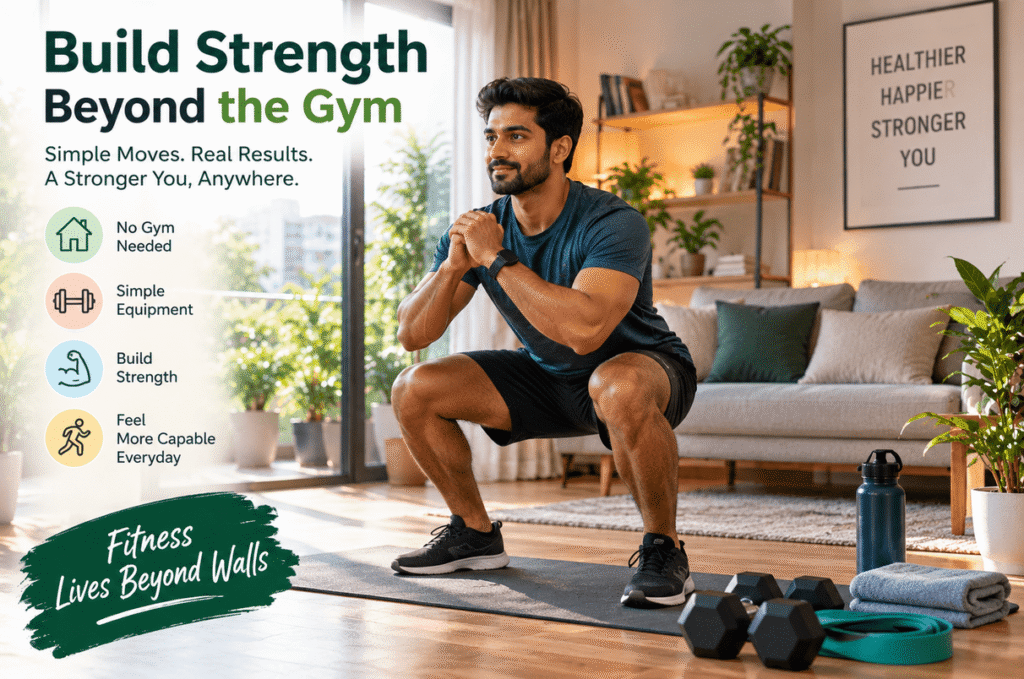
Strength is useful far beyond the gym.
Strong muscles can support everyday tasks such as lifting bags, carrying luggage, climbing stairs, getting up from a chair, or moving household items.
You can build strength using gym equipment, but you can also use bodyweight exercises or other accessible forms of resistance training.
Depending on your experience and health status, basic movements might include:
- Squats or sit-to-stand movements
- Wall push-ups or modified push-ups
- Lunges or supported lunges
- Glute bridges
- Step-ups
- Resistance-band exercises
- Carrying appropriate loads safely
If you are new to strength training, focus on learning good movement patterns rather than trying to lift as much weight as possible.
Start gradually.
Your routine should match your current abilities.
For adults, WHO guidance recommends muscle-strengthening activities involving major muscle groups on at least two days per week.
If you have an injury, chronic health condition, or specific medical concern, seek appropriate professional guidance before beginning a new exercise programme.
Strength does not need to be about looking muscular.
It can be about feeling capable.
6. Physical Fitness Habit #4: Improve Mobility and Flexibility
Strength allows you to produce force.
Mobility helps you move through useful ranges of motion.
Both can matter in everyday life.
Think about sitting at a desk for several hours. Your body may appreciate changing positions and moving through comfortable ranges rather than staying in one posture all day.
Simple mobility work can include gentle movements for the shoulders, hips, ankles, spine, and other areas.
Yoga can also provide a combination of movement, flexibility, balance, and body awareness depending on the style and practice.
You do not need a 60-minute flexibility session every day.
Even a few minutes can become a useful routine.
Try adding mobility to natural transitions in your day.
You could gently move after waking up, before exercise, after a long period of sitting, or during your evening wind-down.
The objective is not to force your body into extreme positions.
Move within a comfortable range and avoid painful movements.
Over time, regular movement can help make physical activity feel more natural and enjoyable.
7. Physical Fitness Habit #5: Choose Fun Activities You Actually Enjoy
One of the biggest mistakes people make is choosing an activity only because they believe it is the “best” workout.
The best activity for you may be the one you actually enjoy enough to repeat.
Maybe you love badminton.
Maybe you prefer cycling.
Maybe swimming makes you feel relaxed.
Maybe dancing is your favourite form of exercise.
Maybe you enjoy hiking with friends.
Maybe you simply love long walks while listening to podcasts.
Enjoyment matters because consistency matters.
When an activity feels like punishment, it can be difficult to maintain.
When it becomes something you look forward to, movement can become part of your lifestyle.
Try making a list of activities you enjoyed as a child or activities you have always wanted to try.
Then choose one.
Invite a friend.
Join a local group.
Try something new.
Fitness does not have to be serious every minute.
Sometimes the most sustainable movement is the movement that makes you smile.
8. Physical Fitness Habit #6: Use Your Weekend to Move, Explore, and Connect
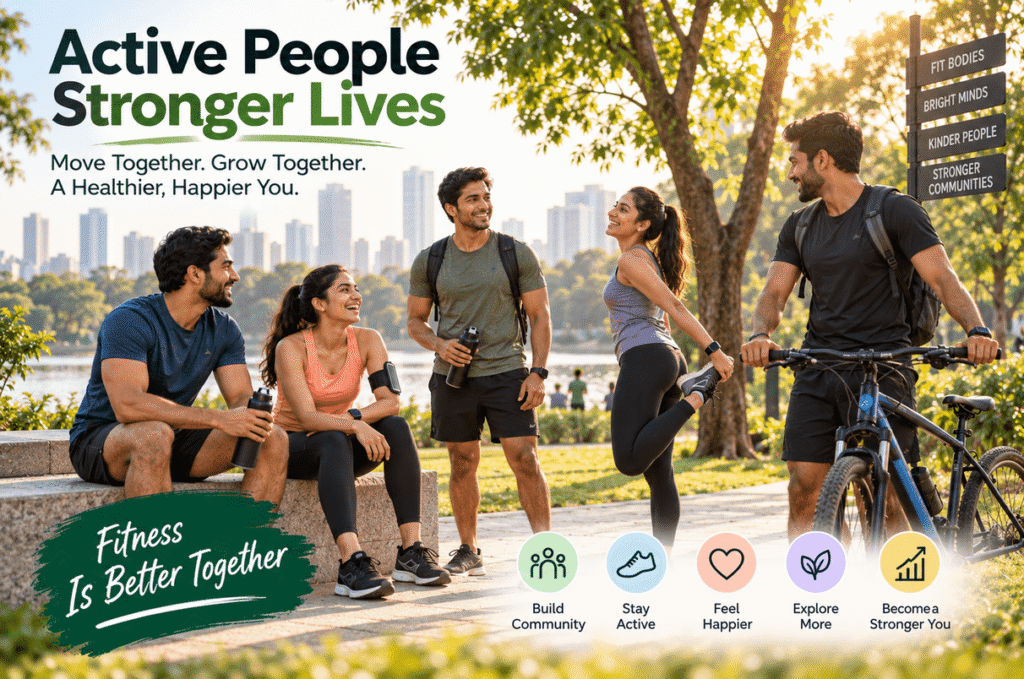
Weekends can be an excellent opportunity to combine movement with social connection.
Instead of meeting friends only at a restaurant or café, consider planning an active experience.
Go for a walk.
Play a sport.
Explore a new area.
Take a cycling trip.
Go hiking.
Visit a park.
Try a beginner-friendly activity together.
This approach can transform exercise from an individual responsibility into a shared experience.
It can also make your social life more active without requiring you to schedule another formal workout.
Community can play an important role in maintaining healthy habits. When people participate together, they may create accountability, encouragement, and a stronger sense of belonging.
That idea connects directly with KearnFit’s broader approach to wellbeing.
Fitness is not only about what you do alone.
It can also be about the people you grow with.
9. Physical Fitness Habit #7: Break Up Long Periods of Sitting
You do not necessarily need to avoid sitting completely.
For many people, sitting is part of work, study, travel, or relaxation.
The goal is to create more opportunities to move.
If you work at a desk, consider standing up periodically and walking for a few minutes.
If you have back-to-back meetings, use appropriate breaks to move.
If you watch television in the evening, stand up during longer breaks or walk around between episodes.
If you are travelling, use reasonable opportunities to stretch or move when safe and practical.
The CDC specifically encourages adults to move more and sit less, noting that even some physical activity can provide health benefits.
This is an important mindset shift.
You do not have to choose between “working out” and “doing nothing.”
There is a huge middle ground.
That middle ground is everyday movement.
10. Physical Fitness Habit #8: Prioritise Recovery as Part of Progress
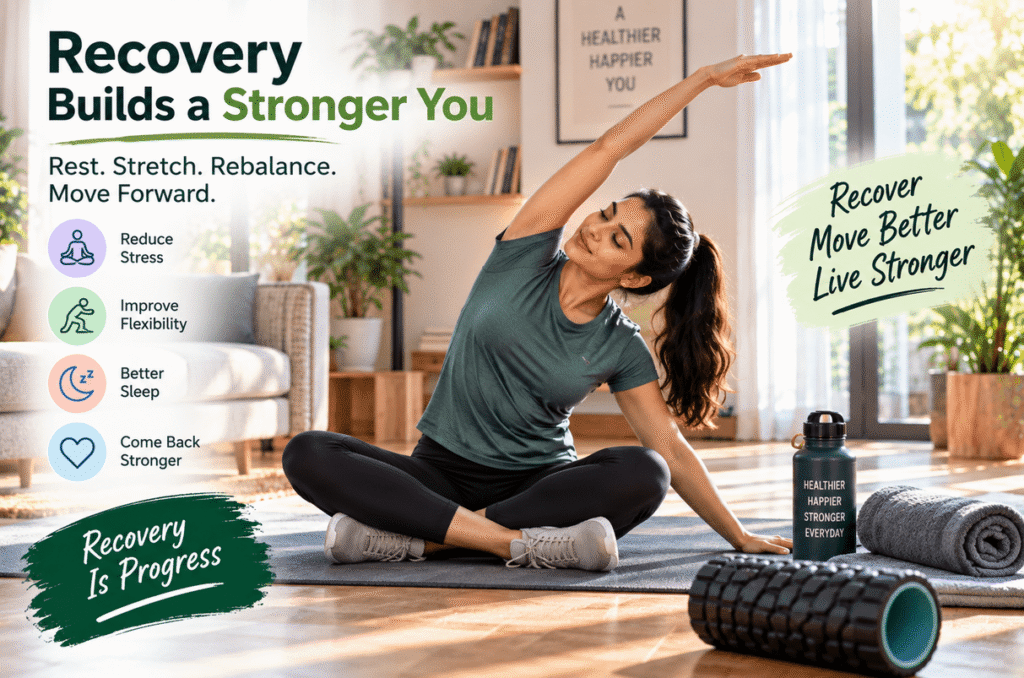
More exercise is not automatically better.
Your body needs time to recover from physical activity.
Recovery can include sleep, rest days, appropriate nutrition, hydration, and adjusting the intensity of your activities according to your needs.
If you are constantly exhausted, experiencing persistent pain, or struggling to recover, pushing harder may not be the answer.
Listen to your body.
There is a difference between normal effort during exercise and pain or symptoms that require attention.
Recovery also allows you to maintain consistency.
Imagine exercising extremely hard for one week and then stopping because you are exhausted.
Compare that with a moderate routine that you can continue for months.
The second approach may be much more sustainable.
Your fitness journey should support your long-term health rather than encourage a cycle of extreme effort and burnout.
11. Physical Fitness Habit #9: Create a Simple Strength and Cardio Routine
While everyday movement is valuable, structured exercise can also play an important role.
For adults aged 18–64, WHO recommends at least 150 minutes of moderate-intensity aerobic activity per week, or 75 minutes of vigorous activity, or an equivalent combination. It also recommends muscle-strengthening activities involving major muscle groups on two or more days per week.
You do not necessarily need to complete these activities in long sessions.
The CDC notes that weekly activity can be spread throughout the week and can be broken into smaller chunks.
A simple week could look something like this:
| Day | Movement idea |
|---|---|
| Monday | 30-minute brisk walk |
| Tuesday | Full-body strength session |
| Wednesday | Easy walk + mobility |
| Thursday | Cycling, swimming, or another cardio activity |
| Friday | Full-body strength session |
| Saturday | Outdoor activity or sport |
| Sunday | Gentle movement and recovery |
This is only an example.
Your ideal schedule will depend on your fitness level, available time, preferences, and health circumstances.
If you are starting from a low activity level, begin with smaller amounts and gradually increase frequency, intensity, and duration. WHO guidance specifically recommends starting with small amounts and progressing over time.
12. Physical Fitness Habit #10: Make Movement Part of Your Identity
The final habit may be the most powerful.
Stop thinking of movement as something you occasionally “have to do.”
Start thinking of yourself as someone who values movement.
That difference may sound small, but it can change how you make decisions.
Instead of saying:
“I need to exercise.”
Try thinking:
“I am someone who takes care of my body.”
Instead of:
“I missed my workout.”
Think:
“What movement can I realistically do today?”
Instead of:
“I don’t have an hour.”
Think:
“Can I find 10 or 15 minutes?”
This removes the all-or-nothing mindset.
You do not need to be perfect.
You need to keep participating.
Some days may involve a challenging workout.
Other days may involve a short walk.
Some days may be focused on recovery.
All of these can have a place in a sustainable lifestyle.
13. Build a Powerful Active Lifestyle Around Your Real Life
The most effective routine is not necessarily the most complicated.
It is the one that fits your actual life.
If you work from home, build movement breaks around meetings.
If you commute, consider whether part of your journey can include walking.
If you have children, play active games together.
If you enjoy socialising, suggest active experiences.
If you love nature, explore walking trails.
If you prefer home workouts, create a simple space where you can move comfortably.
If you travel frequently, learn a few bodyweight movements that require little or no equipment.
Your environment can either make movement easier or harder.
Look for ways to make the healthy choice convenient.
Keep comfortable walking shoes accessible.
Keep a resistance band where you can see it.
Put your yoga mat somewhere you will actually use it.
Schedule activities in your calendar.
Invite people to join you.
The objective is to remove unnecessary friction.
When healthy behaviours become easier to start, they become easier to repeat.
14. Create a Physical Fitness Routine You Can Actually Maintain
A sustainable routine should answer three questions:
What do I enjoy?
What can I realistically do?
What can I continue doing next month?
If the answer to the third question is “probably not,” the routine may need to be simplified.
Start with your current lifestyle instead of designing an imaginary perfect week.
If you currently exercise once a week, moving to three sessions may already be meaningful.
If you rarely walk, adding a short daily walk may be a great starting point.
If you already exercise regularly, you may focus on mobility, recovery, strength balance, or trying a new activity.
Your starting point matters.
Your next step matters more than comparing yourself with someone who has been training for years.
15. Avoid These Common Physical Fitness Mistakes
A healthier approach also means knowing what to avoid.
One common mistake is believing that every workout needs to be intense.
It does not.
Another is thinking that sweating more automatically means you had a better workout.
It does not.
Some people also compare themselves constantly with fitness influencers online. Social media often presents highly edited snapshots of people’s lives and bodies. Your health journey should not be measured against someone else’s highlight reel.
Another mistake is ignoring recovery.
Your body is not a machine that needs to operate at maximum intensity every day.
Another common problem is trying to change everything at once.
A simpler routine that you maintain is generally more useful than a perfect routine that lasts seven days.
Finally, do not ignore persistent pain or unusual symptoms. If something concerns you, seek appropriate medical or professional advice.
16. Physical Fitness Can Strengthen More Than Your Body
Movement can affect more than muscles and endurance.
The CDC reports that physical activity can improve sleep quality, reduce feelings of anxiety, support brain health, and reduce the risk of several chronic conditions.
This is one reason an active lifestyle can fit naturally within a broader wellness philosophy.
When you move regularly, you may create time away from screens.
You may spend more time outdoors.
You may connect with other people.
You may gain confidence from learning a new skill.
You may discover activities you genuinely enjoy.
Movement can become part of a much bigger lifestyle.
This is especially relevant to KearnFit because our approach does not treat physical wellbeing as an isolated goal.
Your body connects with your mind.
Your emotions influence your motivation.
Your community can influence your habits.
Your daily lifestyle shapes all of them.
That is why fitness can be viewed as a complete journey rather than a single workout.
17. Build Your Own 30-Day Physical Fitness Challenge
If you want to put these ideas into action, create a simple 30-day movement challenge.
Do not make the challenge extreme.
Make it achievable.
For the first week, focus on walking and reducing long periods of sitting.
During the second week, add two simple strength sessions.
During the third week, experiment with an activity you enjoy.
During the fourth week, review what worked and build your long-term routine.
You can track simple behaviours:
| Habit | Weekly goal |
|---|---|
| Walking | Regular short walks |
| Strength | 2 sessions |
| Mobility | Several short sessions |
| Outdoor activity | 1 enjoyable activity |
| Sitting breaks | Regular movement breaks |
| Recovery | Adequate rest |
| Social movement | 1 shared activity |
The purpose is not to create a competition.
It is to create awareness.
At the end of 30 days, ask yourself:
What did I enjoy?
What felt difficult?
What was realistic?
What would I like to continue?
That reflection can help transform a short challenge into a long-term lifestyle.
18. How KearnFit Can Help You Move Beyond the Gym
At KearnFit, we believe fitness should be practical, positive, and connected to real life.
The gym can be part of your journey, but it does not have to define it.
A walk with a friend can count.
A weekend hike can count.
A game of badminton can count.
A strength session at home can count.
A cycling trip can count.
A few minutes of mobility between long periods of sitting can count.
The bigger idea is to create a lifestyle where movement becomes natural.
KearnFit also looks at fitness through four connected dimensions: mental, physical, emotional, and financial.
Physical strength is important.
But so is a healthy mindset.
So are meaningful relationships.
So is building responsible habits that support your broader life.
When these areas work together, your approach to wellbeing can become more balanced and sustainable.
That is the KearnFit philosophy.
19. Your Next Step Toward Physical Fitness
You do not need to wait for Monday.
You do not need to buy expensive equipment.
You do not need the perfect workout clothes.
You do not need an hour of free time.
You can start with what you have.
Take a walk.
Stretch.
Climb the stairs.
Play a sport.
Try a beginner strength routine.
Dance.
Cycle.
Explore your neighbourhood.
Invite a friend.
Then do it again tomorrow.
Physical activity is not an all-or-nothing decision. WHO emphasises that some activity is better than none, and recommends gradually building frequency, intensity, and duration when starting from a lower level of activity.
The goal is not to turn every moment into exercise.
The goal is to create a life where movement has a natural place.
Because fitness is not only what happens when you walk through the doors of a gym.
It is what you do when those doors are nowhere around.
20. Final Thoughts: Make Physical Fitness Part of Life
The strongest fitness routine may not be the one that looks most impressive on social media.
It may be the one that quietly becomes part of your everyday life.
Walking to the shop.
Taking the stairs.
Playing with your children.
Going for a weekend hike.
Strength training twice a week.
Stretching after a long workday.
Cycling with friends.
Dancing in your living room.
Taking a movement break between meetings.
These moments can help create a lifestyle that is more active, capable, and enjoyable.
The World Health Organization recommends that adults aim for 150–300 minutes of moderate aerobic activity per week, or an equivalent combination of moderate and vigorous activity, along with muscle-strengthening activities on at least two days per week. But the journey toward those levels can begin with small steps.
So, don’t wait for the perfect routine.
Start with the routine that fits your life.
Make movement enjoyable.
Make progress sustainable.
And remember that your fitness journey belongs to you.
At KearnFit, we want to help you look at health from a bigger perspective—one that goes beyond the gym and beyond appearance.
Move more. Live better. Grow stronger.
Join the KearnFit Community
Your journey does not have to happen alone.
Follow KearnFit for practical wellness insights, healthy lifestyle ideas, personal growth content, and a community focused on becoming stronger across every dimension of life.
Visit KearnFit: www.kearnfit.com
KearnFit — Four Dimensions. One Better You.